

Have you ever wanted to make a positive change in your life but found yourself returning to the same old habits? Perhaps you want to stop overthinking, develop a healthier routine, leave an unhealthy relationship pattern, or become more confident. You know something needs to change, yet taking the first step feels surprisingly difficult.
This happens because change is not simply about making a decision. It involves adjusting familiar behaviors, emotional responses, and expectations. Even habits that no longer benefit us can provide a sense of comfort and security.
Understanding why change feels difficult can help you move forward with greater patience, confidence, and self-compassion.
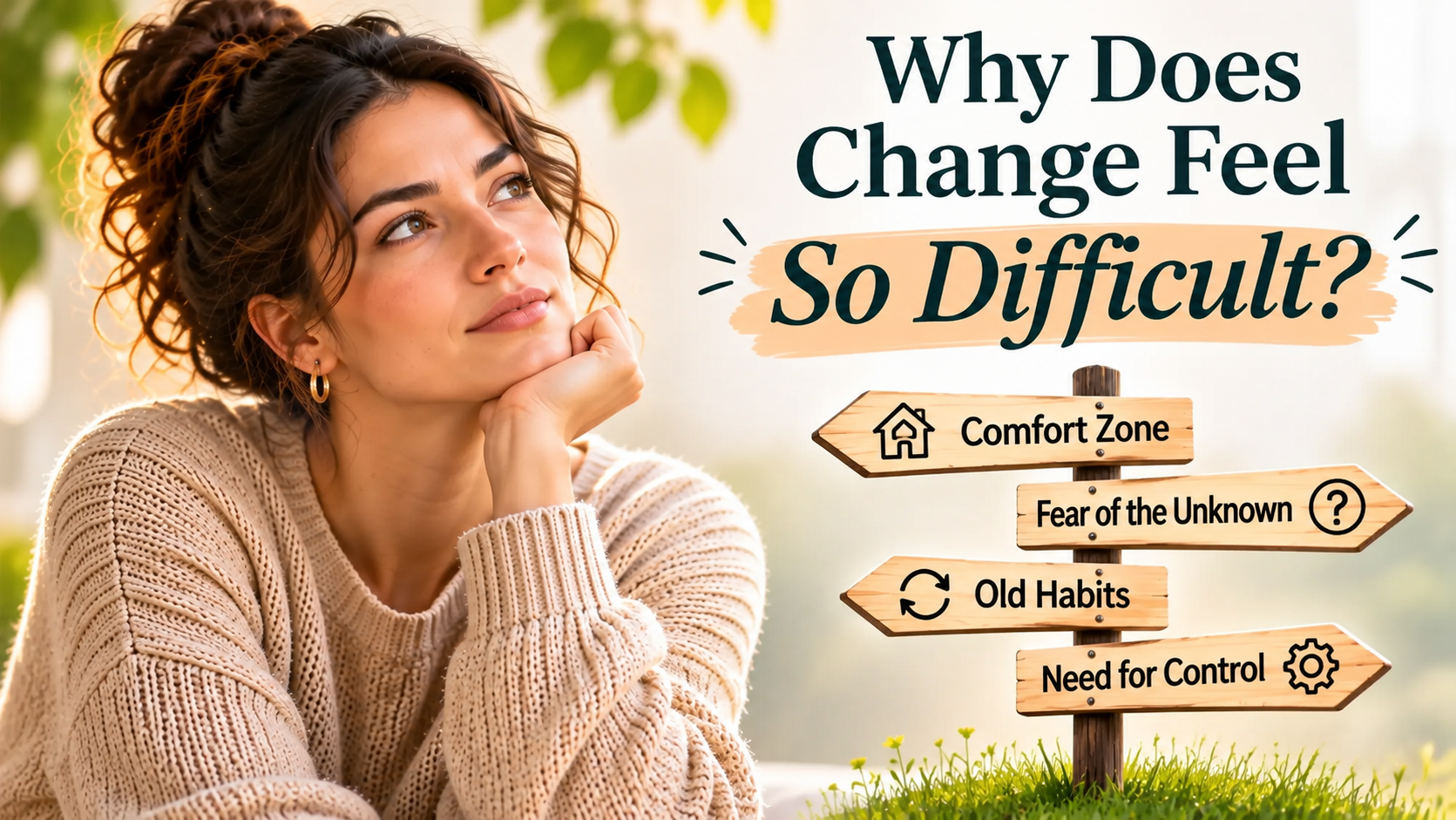
Why Does Change Feel So Difficult?
People naturally become accustomed to familiar routines. Repeated behaviors gradually become automatic, requiring less conscious effort.
When you try to change an established habit, you must pay more attention to your actions and make an effort to respond differently.
For example, someone who regularly avoids difficult conversations may find it uncomfortable to express their feelings. Even if honest communication could improve their relationships, avoiding conflict may feel safer because it is familiar.
The discomfort does not necessarily mean the change is wrong. It may simply mean you are adjusting to something new.
1. Your Brain Prefers Familiar Patterns
Habits develop through repetition. When you perform the same behavior regularly, your brain becomes more efficient at carrying it out.
This can make everyday life easier, but it can also make established habits difficult to replace.
You might automatically reach for your phone when bored, avoid tasks that create anxiety, or react defensively during disagreements.
Changing these patterns requires awareness and practice. Instead of expecting yourself to behave differently overnight, begin by noticing when the habit appears.
2. Familiar Habits Create a Sense of Security
Even unhelpful habits can feel emotionally comfortable because you know what to expect.
Staying in a familiar routine may feel safer than starting a new career. Avoiding an uncomfortable conversation may seem easier than risking disagreement.
This creates an internal conflict between wanting something better and fearing what might happen when things change.
Recognizing this conflict can help you approach change without blaming yourself for feeling hesitant.
3. Fear of Failure Can Hold You Back
Sometimes, resistance to change comes from worrying about the outcome.
You might think:
What if I cannot maintain this habit?
What if I make the wrong decision?
What if people judge me?
What if things become worse?
What if I disappoint myself again?
These thoughts can make starting feel more difficult than staying where you are.
Instead of expecting immediate success, try viewing change as a learning process. Progress does not require perfection.
4. Emotional Attachments Make Letting Go Harder
Some habits are connected to memories, relationships, and past experiences.
You might hold on to a routine because it reminds you of a familiar period in your life. You may continue certain relationship patterns because they once helped you feel accepted or protected.
Letting go can bring unexpected emotions, including sadness, guilt, uncertainty, or fear.
Sometimes, you are not only changing a behavior. You are also adjusting to a different understanding of yourself and your life.
If these experiences feel overwhelming, Florida online mental health counseling may help you explore the emotional patterns influencing your decisions.
5. Uncertainty Makes the Future Feel Overwhelming
When you change something familiar, you cannot always predict what will happen next.
Starting a new routine, setting boundaries, or changing careers may involve outcomes you cannot fully control.
Your mind may focus on possible problems rather than potential benefits. This can lead to overthinking, delaying decisions, and repeatedly questioning yourself.
Instead of trying to predict everything, focus on the next practical step. You do not need a complete picture of the future to begin.
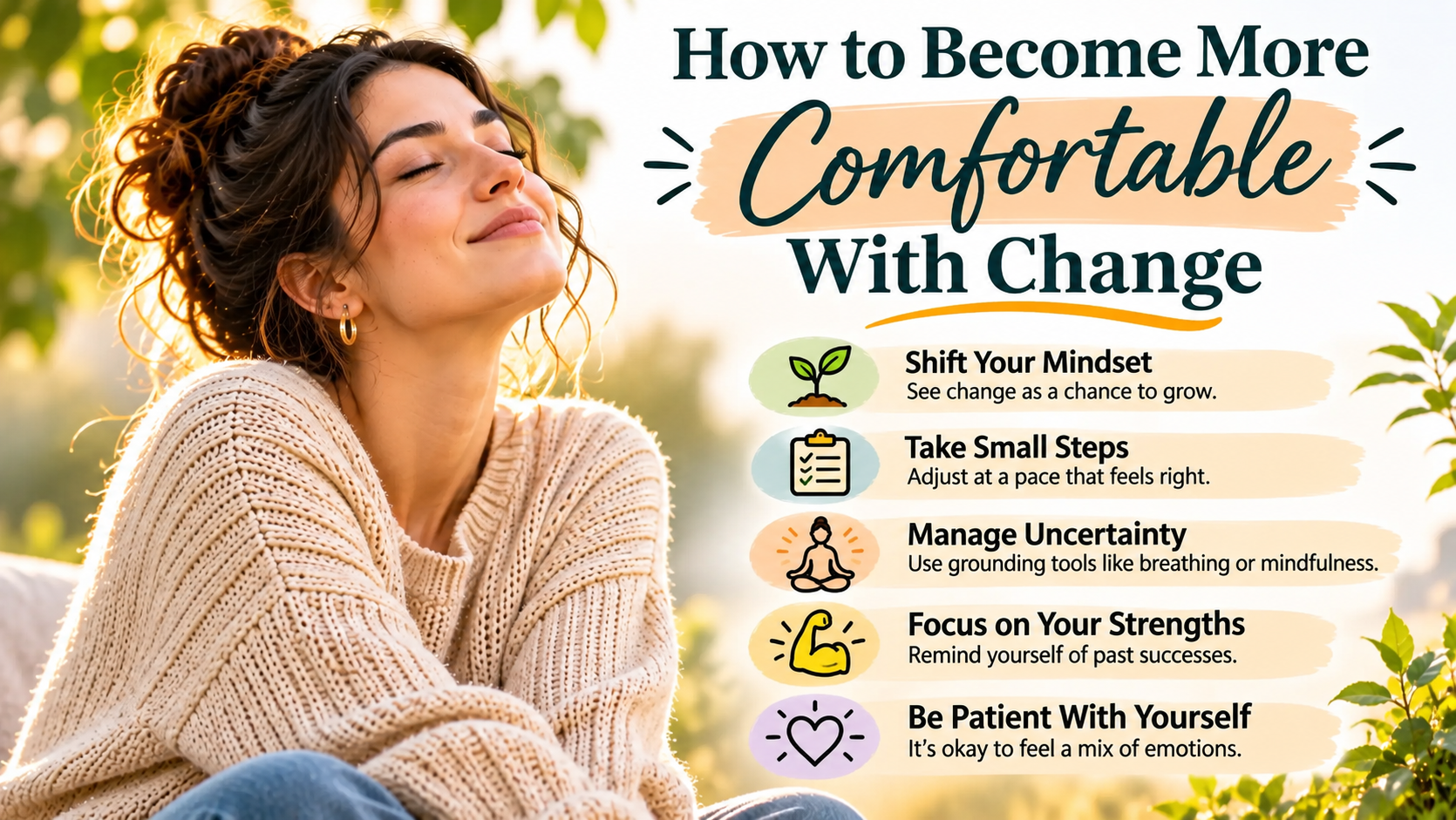
How to Become More Comfortable With Change
You do not have to transform your entire life at once. Small, consistent actions can make unfamiliar behaviors feel more manageable.
1. Start with one small change. Choose one area that matters to you and identify a realistic first step.
2. Understand your old habits. Ask yourself whether a behavior provides temporary comfort, helps you avoid discomfort, or makes you feel in control.
3. Replace habits with healthier alternatives. If you scroll through social media whenever you feel stressed, try a short walk, journaling, or another calming activity.
4. Accept discomfort. New behaviors may feel awkward at first. A setback does not erase your progress.
5. Celebrate small improvements. Notice when you make a different choice, maintain a boundary, or respond more calmly than before.
When Professional Support May Help
Sometimes, resistance to change is connected to deeper emotional experiences, anxiety, low self-confidence, or relationship difficulties.
If you repeatedly feel stuck or find it difficult to move away from patterns that negatively affect your life, speaking with a mental health professional may help.
Therapy can provide a supportive environment to explore your thoughts, understand recurring behaviors, and develop healthier responses.
Through online therapy and counseling, you can explore virtual mental health support without traveling to an office.
At Let's Talk 4 Health, you can learn more about online mental health services and available support options in Florida.
Frequently Asked Questions
Why do I return to old habits even when I want to change?
Familiar habits often become automatic through repetition. They may also provide temporary comfort or help you avoid uncomfortable emotions. Building awareness and practicing alternative behaviors can gradually change these patterns.
Is it normal to feel sad when making positive changes?
Yes. Positive changes can involve leaving behind familiar routines, relationships, or expectations. Feeling emotional does not necessarily mean you are making the wrong decision.
How long does it take to develop a new habit?
There is no single timeline for everyone. It depends on the behavior, your circumstances, and how consistently you practice it.
Can therapy help me overcome resistance to change?
Therapy can help you understand emotional barriers, explore unhelpful thought patterns, and develop practical strategies for making changes that support your well-being. Visit the telehealth therapy FAQs for more information.
Give Yourself Permission to Grow at Your Own Pace
Letting go of familiar habits can feel difficult because those behaviors may be connected to comfort, identity, emotional security, and past experiences.
You do not need to change everything at once. Start by recognizing patterns that no longer support you and taking one manageable step toward something healthier.
If you are ready to explore your emotional patterns, learn more about online mental health counseling in Florida, meet the Let's Talk 4 Health team, or contact the practice to ask about available services.
You do not have to remain the person you were simply because an old habit feels familiar. Growth begins when you give yourself permission to try something different.
Expand the article to 5000 charactersAdd practical examples for each section