
How Online Therapy Works: A Step by Step Guide for First Time Users
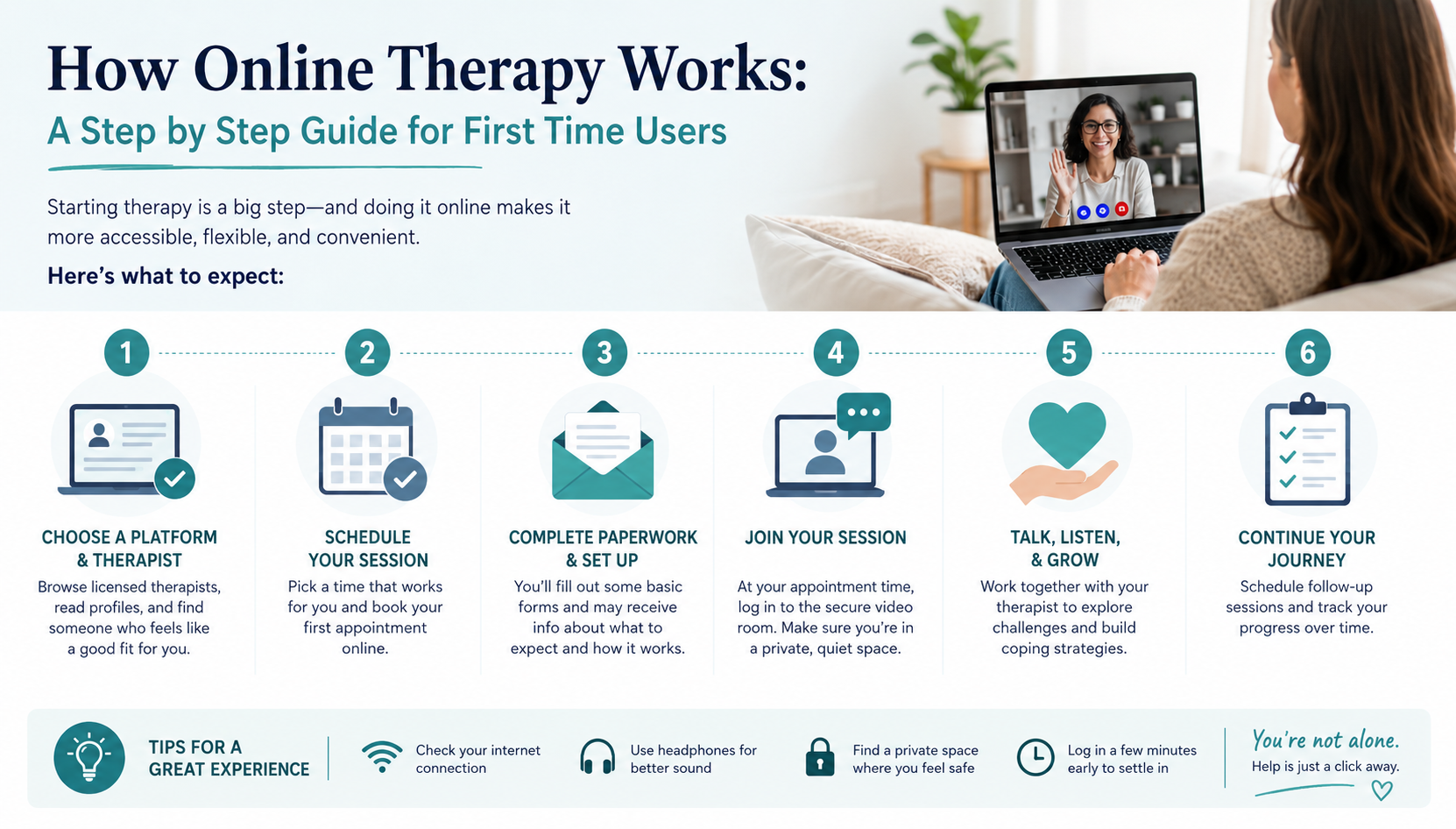
Starting therapy for the first time can feel intimidating. Many people wonder what to expect, how online sessions work, or whether virtual therapy will actually feel personal and effective.
These concerns are completely normal.
Beginning therapy often means stepping into unfamiliar territory, especially when you are already dealing with anxiety, stress, burnout, or emotional overwhelm. The good news is that online therapy is designed to make support more accessible, flexible, and comfortable, especially for people balancing busy schedules or emotional exhaustion.
At Let’s Talk 4 Health, we work with many first time therapy clients who are unsure about where to begin. Understanding the process ahead of time can help reduce uncertainty and make the experience feel more approachable. You can learn more about our services by visiting our home page.
What Is Online Therapy?
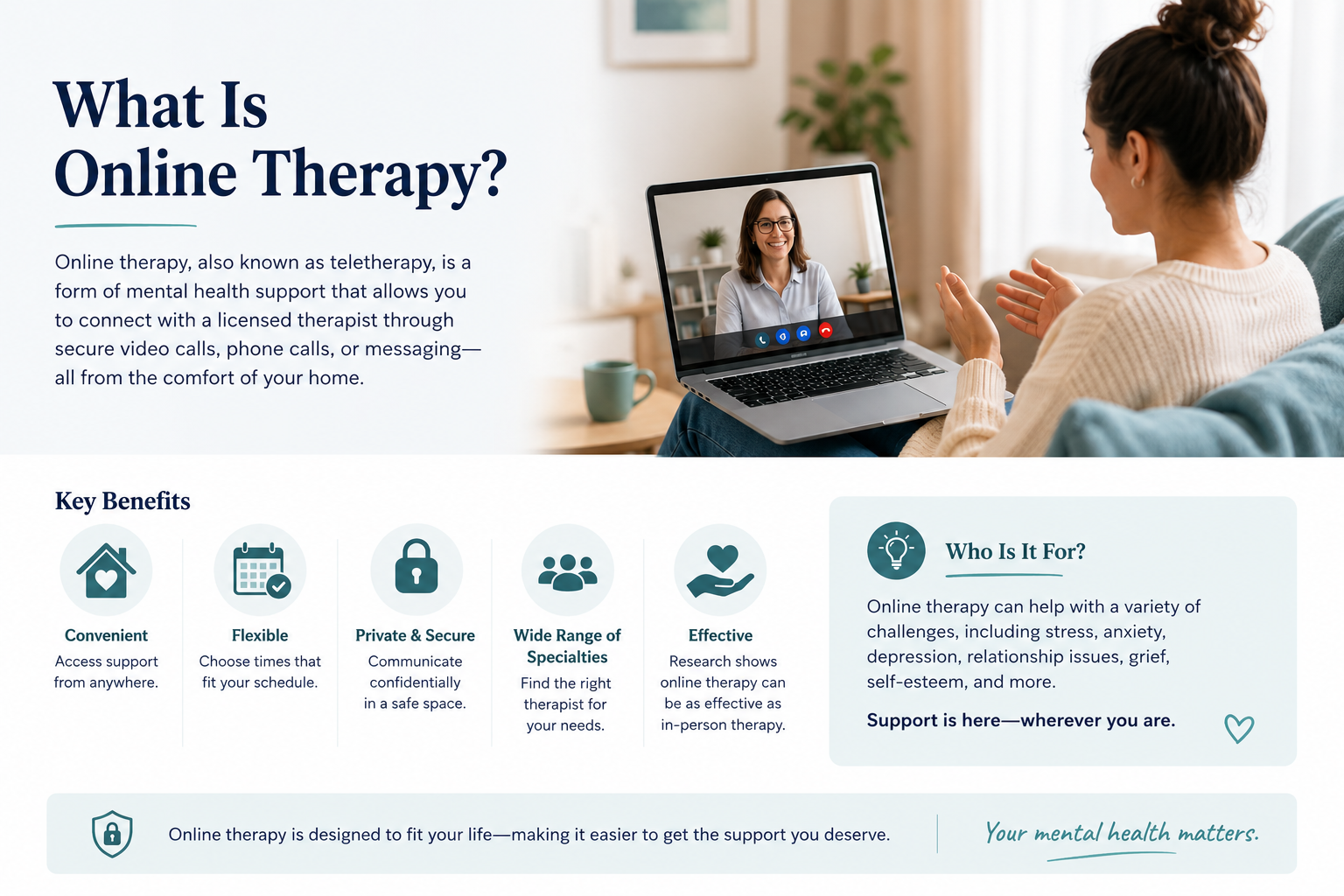
Online therapy, also called telehealth therapy or virtual counseling, allows you to meet with a licensed therapist through secure video sessions from your home or another private location.The experience is similar to in person therapy in many ways. You still talk through thoughts, emotions, stressors, and goals with a trained professional. The difference is that sessions happen remotely using a secure online platform.Research continues to show that online therapy can be highly effective for anxiety, depression, stress, burnout, and many other mental health concerns. Many people also find it more comfortable and accessible than traditional office visits.You can explore available care options through Florida online mental health counseling.
Step 1: Scheduling Your First Appointment
The first step is reaching out to schedule a consultation or intake session.At Let’s Talk 4 Health, new clients can begin by connecting through our contact page for anxiety and depression support.During this stage, you may discuss:What you are currently struggling withYour availability and scheduling preferencesQuestions about therapy or the processInsurance or payment informationYou do not need to have everything figured out before reaching out. Many people start therapy simply knowing they feel overwhelmed, anxious, emotionally exhausted, or stuck.
Step 2: Completing Intake Forms
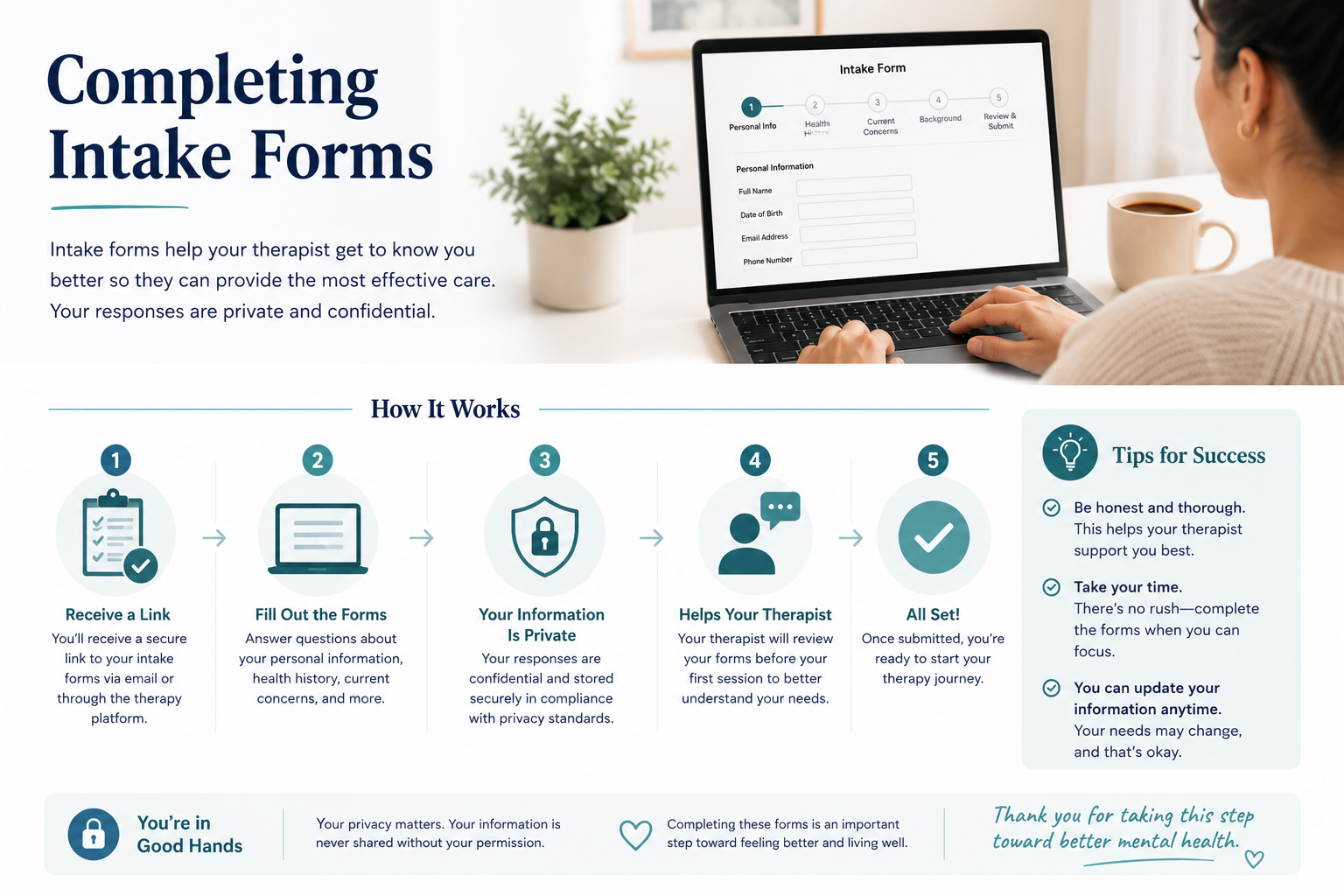
Before your first session, you will usually complete intake paperwork electronically.These forms often include:Basic personal informationMental health historyCurrent symptoms or concernsConsent and privacy formsThis helps your therapist better understand your background and needs before meeting with you.For information about confidentiality and policies, you can review our privacy policy.
Step 3: Preparing for Your First Online Session
One of the benefits of online therapy is that you can attend from a familiar environment. Preparing your space ahead of time can help you feel more comfortable and focused.Helpful preparation tips include:Choosing a quiet, private locationUsing headphones for privacy if neededTesting your internet connection and deviceHaving water or a notebook nearby if helpfulYou do not need a perfect setup. The goal is simply creating enough privacy and comfort to focus on the session.Many first time clients find online sessions feel less intimidating than sitting in a traditional office.You can learn more about virtual care through Florida telemental health therapy.
Step 4: What Happens During the First Session
The first therapy session is often focused on understanding what brought you to therapy and what support you are looking for.Your therapist may ask about:Current stressors or symptomsEmotional patterns or concernsRelationships and daily lifeGoals for therapyMental health historyYou are not expected to share everything immediately. Therapy is a gradual process built on trust and emotional safety.Many people worry they will not know what to say. That is okay. Your therapist helps guide the conversation.
Step 5: Identifying Goals and Patterns
As therapy continues, you and your therapist begin identifying patterns that may be contributing to stress or emotional difficulty.This might include:Anxiety and overthinkingBurnout and exhaustionPerfectionism or people pleasingRelationship stressNervous system dysregulationEmotional overwhelm or avoidanceTherapy helps create awareness around how thoughts, emotions, behaviors, and stress responses interact.Many individuals also benefit from learning practical regulation tools through Florida telemental health services.
Step 6: Learning Coping and Regulation Skills
Therapy is not only about talking through problems. It is also about building tools that support emotional wellbeing in daily life.Depending on your needs, sessions may include:Grounding techniques for anxietyStress management strategiesEmotional regulation skillsCommunication and boundary workNervous system calming practicesCognitive and behavioral coping toolsThe goal is not perfection. It is helping you feel more supported, regulated, and emotionally steady over time.For individuals seeking additional structure and accountability, online mental health coaching in Florida may also be helpful.
Step 7: Building Consistency and Emotional Safety
Therapy works best when there is consistency and trust within the process.Over time, therapy often becomes a space where clients:Process emotions safelyExplore long standing patternsDevelop healthier coping strategiesFeel less alone in their experiencesHealing is rarely immediate or linear. Progress often happens gradually through repeated moments of awareness, regulation, and support.Many clients begin therapy focused on reducing stress and later discover deeper emotional growth and resilience.
Common Concerns About Starting Online Therapy
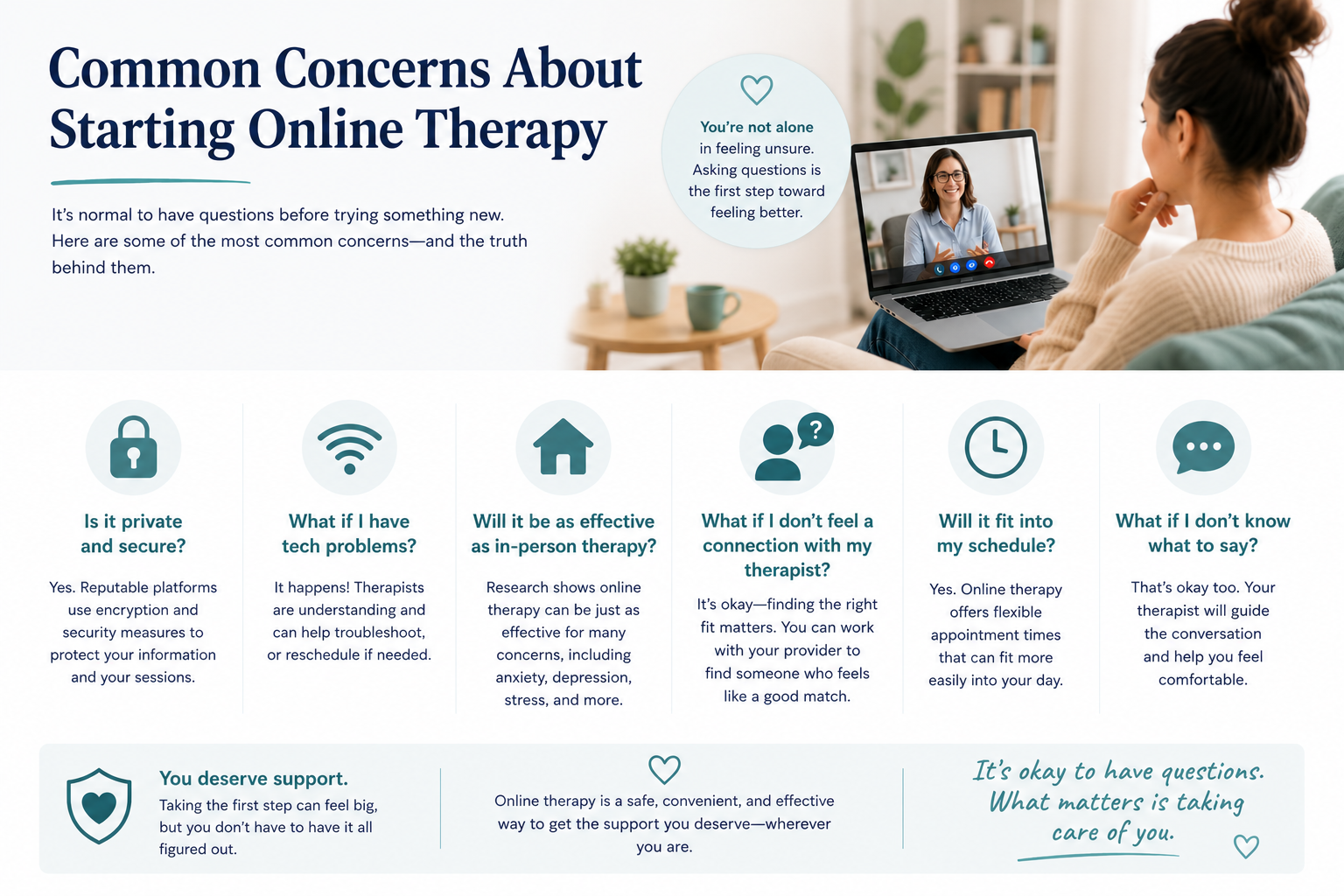
“What if it feels awkward?”
It is completely normal for the first session to feel unfamiliar. Most people become more comfortable after a few conversations.
“Do I need to be in crisis to start therapy?”
No. Therapy can help with everyday stress, anxiety, burnout, emotional overwhelm, relationship issues, or simply feeling stuck.
“Is online therapy really private?”
Yes. Sessions are conducted through secure, HIPAA compliant platforms designed to protect confidentiality.You can review additional details on our telehealth therapy FAQs page.
Why Many First Time Clients Prefer Online Therapy
Online therapy removes many of the barriers that make seeking support feel difficult.Benefits often include:Flexible schedulingNo commuting or travel stressGreater comfort from homeEasier access to consistent supportMore privacy and convenienceFor people already feeling mentally overloaded, reducing logistical stress can make beginning therapy feel much more manageable.
Why Choose Let’s Talk 4 Health
Let’s Talk 4 Health offers compassionate, evidence based support for individuals navigating anxiety, burnout, stress, emotional overwhelm, and life transitions. With over 35 years of experience, Michelle Albo, LMHC, MCAP, CTP, leads the practice with a focus on sustainable emotional healing and nervous system regulation.You can learn more about our providers by visiting our meet our team page.
Starting Therapy Does Not Mean Something Is Wrong With You
Beginning therapy is not a sign of weakness. It is a step toward understanding yourself more clearly and creating support where you need it.You do not need to wait until things feel unbearable to seek help.Online therapy creates space to slow down, process what you are carrying, and begin building healthier ways to navigate stress, emotions, and daily life.You are allowed to ask for support. And you do not have to figure everything out alone.