
The Truth About Willpower: Why You Don’t Stick to Resolutions and What Actually Works

Many people believe that success comes down to willpower. When goals fall apart, the explanation often sounds familiar: “I just didn’t have enough discipline.” Over time, this belief can erode confidence and reinforce the idea that personal change is simply a matter of trying harder.
The truth is far more nuanced. Struggling to stick with resolutions is not a character flaw. It is a predictable response to how the brain processes effort, stress, and decision making. Understanding the science behind willpower, cognitive overload, and habit formation can help replace frustration with clarity and create a more sustainable path forward.
At Let’s Talk 4 Health, we work with individuals who feel stuck in cycles of motivation and burnout. Learning how the brain actually works allows people to build habits that last without relying on constant self control. You can learn more about our approach by visiting our home page.
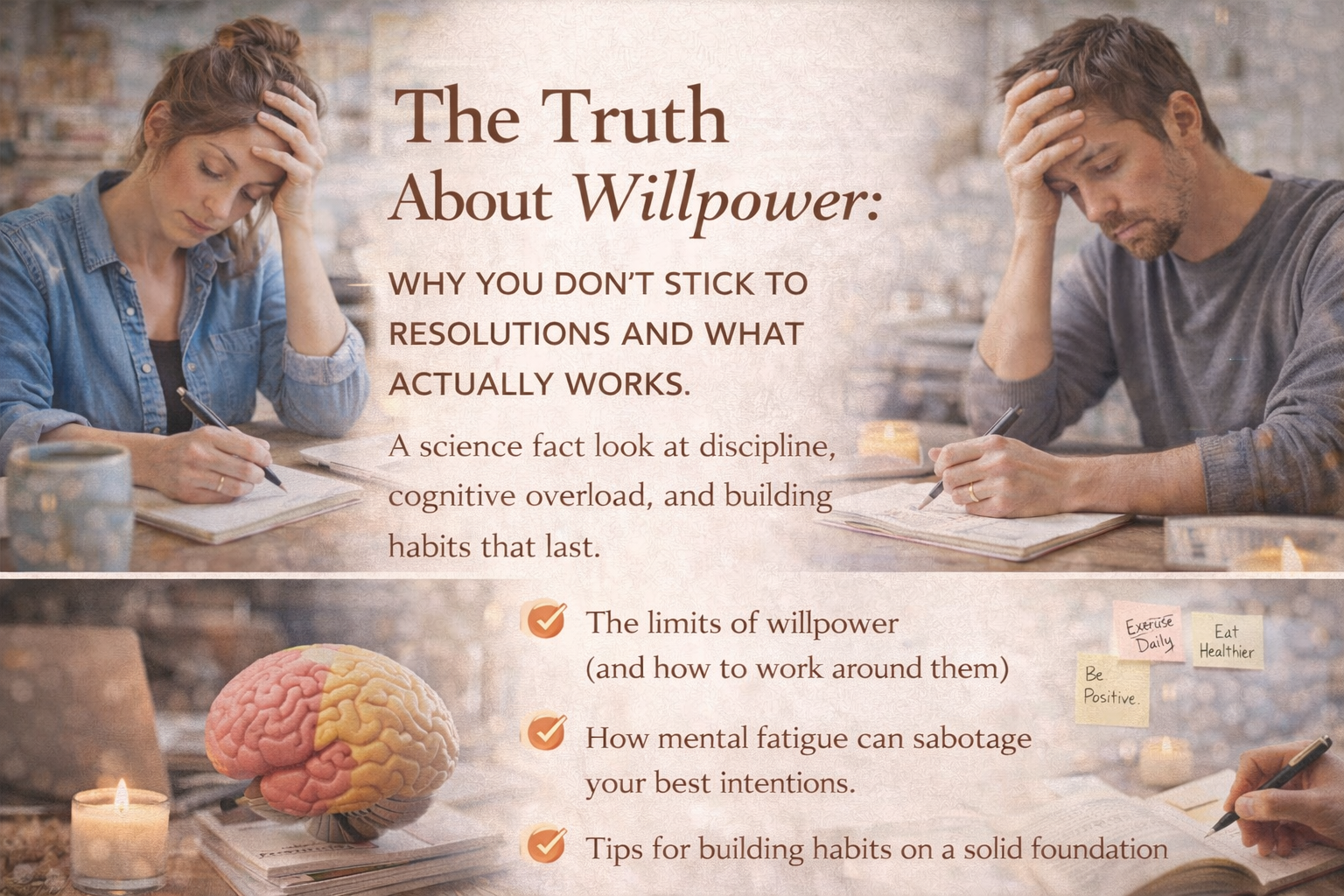
Why Willpower Is Often Misunderstood
Willpower is commonly described as an internal resource that should be strong enough to override temptation and fatigue. In reality, willpower is limited and heavily influenced by external and internal factors.
The brain prioritizes efficiency and survival. When energy is low or stress is high, the brain naturally shifts toward behaviors that conserve effort. This is not laziness. It is biology. Expecting willpower to remain constant ignores how stress, sleep, emotions, and mental load impact decision making.
When people rely solely on willpower, they often experience short bursts of success followed by burnout. This cycle reinforces self blame rather than addressing the underlying causes of inconsistency.
Individuals who want to explore these patterns with professional support may benefit from Florida online mental health counseling.
Cognitive Overload and Decision Fatigue
One of the biggest obstacles to sustained change is cognitive overload. Every day, the brain processes countless decisions, from work responsibilities to family needs to emotional regulation. Over time, this mental effort depletes available cognitive resources.
Decision fatigue occurs when the brain becomes overwhelmed by constant choices. When this happens, self control weakens, not because of lack of discipline, but because the brain is exhausted.
During periods of high stress, the brain prioritizes immediate relief over long term goals. This is why habits that require planning or restraint often fall apart when life feels overwhelming.
Learning how to reduce cognitive load is essential for habit formation. Therapy can help individuals identify stressors and restructure routines through Florida telemental health therapy.
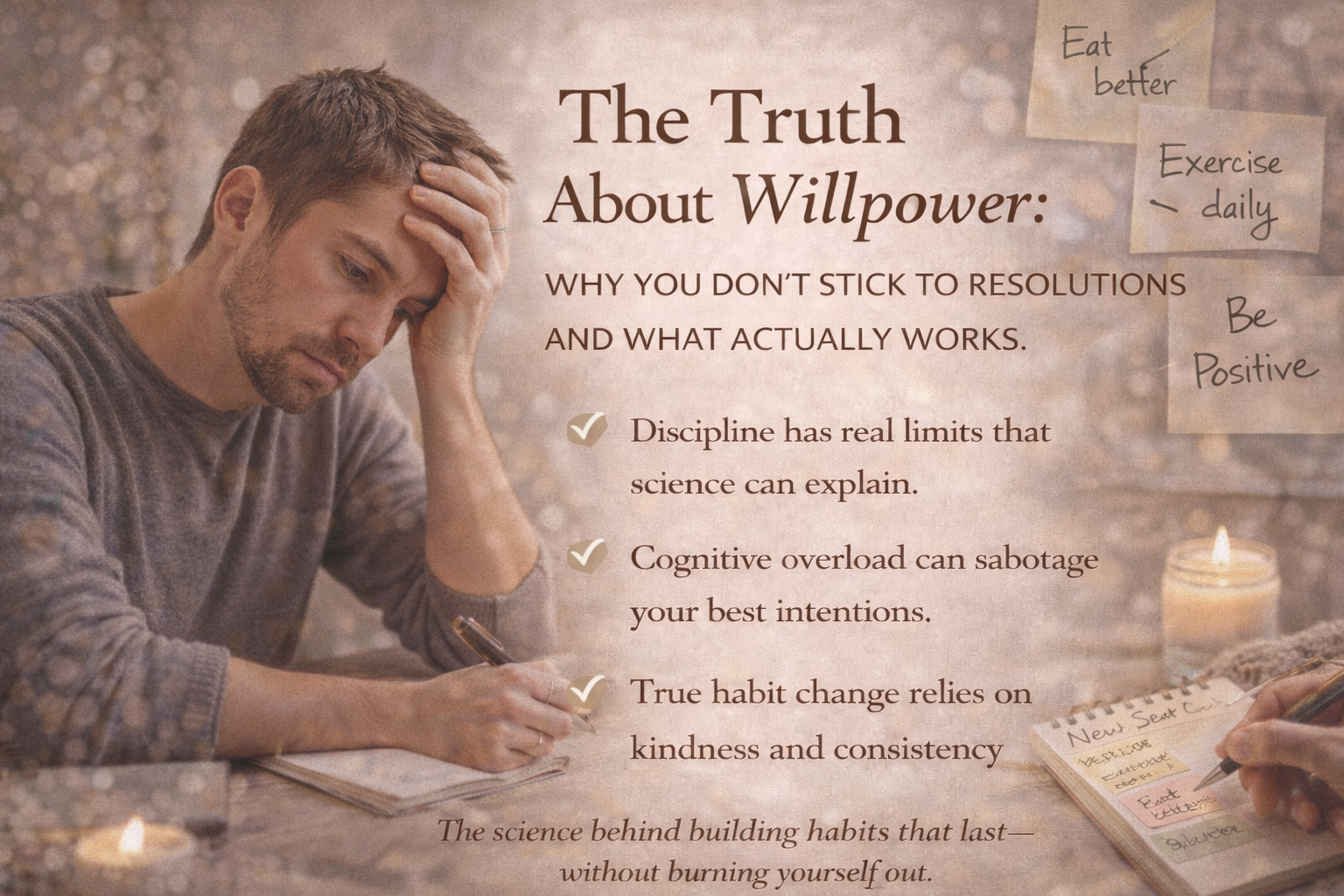
Discipline Is Not the Same as Self Punishment
Discipline is often framed as pushing through discomfort at all costs. However, sustainable discipline looks very different. It involves creating systems that support behavior rather than relying on constant effort.
Self punishment and rigid expectations increase stress, which actually makes habits harder to maintain. When the nervous system is overloaded, the brain resists additional demands.
True discipline is rooted in consistency, flexibility, and self awareness. It allows for adjustment without abandoning progress entirely.
For individuals seeking structure without shame, online mental health coaching in Florida can offer practical guidance.
How Habits Form in the Brain
Habits are created through repetition, not motivation. When a behavior is repeated in a consistent context, neural pathways strengthen and the behavior becomes more automatic.
Early habit formation requires more energy because the brain has not yet automated the behavior. This is why change feels hardest at the beginning. Stress, fatigue, and emotional overload can interrupt this process.
Small, manageable actions are far more effective than drastic changes. When habits are too demanding, the brain perceives them as threats and resists.
Working with the brain rather than against it is essential. Support through online therapy in Florida can help individuals design habits that align with their capacity.

Why Resolutions Often Fail
Resolutions often fail because they are based on ideal circumstances rather than real life. Many goals assume unlimited energy, time, and motivation, which rarely exist consistently.
When expectations are unrealistic, missing a day can feel like failure. This all or nothing mindset leads many people to abandon goals entirely rather than adapt them.
Sustainable change allows for imperfection. Progress is built through return, not consistency alone.
What Actually Works Instead of Willpower
Habits that last are supported by environment, routine, and emotional regulation. Instead of asking “How can I be more disciplined,” a more effective question is “How can I make this easier to repeat?”
Helpful strategies include:
Reducing the number of decisions required
Attaching new habits to existing routines
Lowering the threshold for success
Planning for low energy days
Allowing flexibility without quitting
These approaches reduce cognitive strain and support long term consistency.
The Role of Stress and Emotional Health
Stress significantly reduces the brain’s capacity for sustained effort. When anxiety, depression, or burnout are present, willpower becomes even more limited.
Addressing emotional health often leads to improved follow through without forcing discipline. Supporting the nervous system through rest, grounding, and realistic pacing increases the brain’s ability to form habits.
Many individuals find that focusing on emotional wellbeing first through Florida telemental health services leads to more sustainable change.
When Professional Support Can Help
If you feel stuck in cycles of motivation and burnout, professional support can help identify underlying barriers. Therapy provides a space to explore stress, self criticism, emotional patterns, and realistic habit building.
Common questions about therapy and coaching can be found on our telehealth therapy FAQs page.
If you are ready to take the next step, you can reach out through our contact page for anxiety and depression support.
Why Choose Let’s Talk 4 Health
Let’s Talk 4 Health offers compassionate, evidence based mental health care focused on realistic, sustainable change. With over 35 years of experience, Michelle Albo, LMHC, MCAP, CTP, leads the practice with an emphasis on understanding the brain, reducing overwhelm, and supporting long term wellbeing.
You can learn more about our providers by visiting our meet our team page. For information on confidentiality and data protection, please review our privacy policy.
Moving Beyond Willpower
Change does not fail because people lack discipline. It fails because systems are unsupportive and expectations are unrealistic. When habits are built with the brain in mind, effort decreases and consistency becomes more achievable.
Understanding the limits of willpower allows space for compassion and smarter strategies. With the right tools and support, building habits that last is possible without constant self control.