
The Connection Between Loneliness and Mental Health
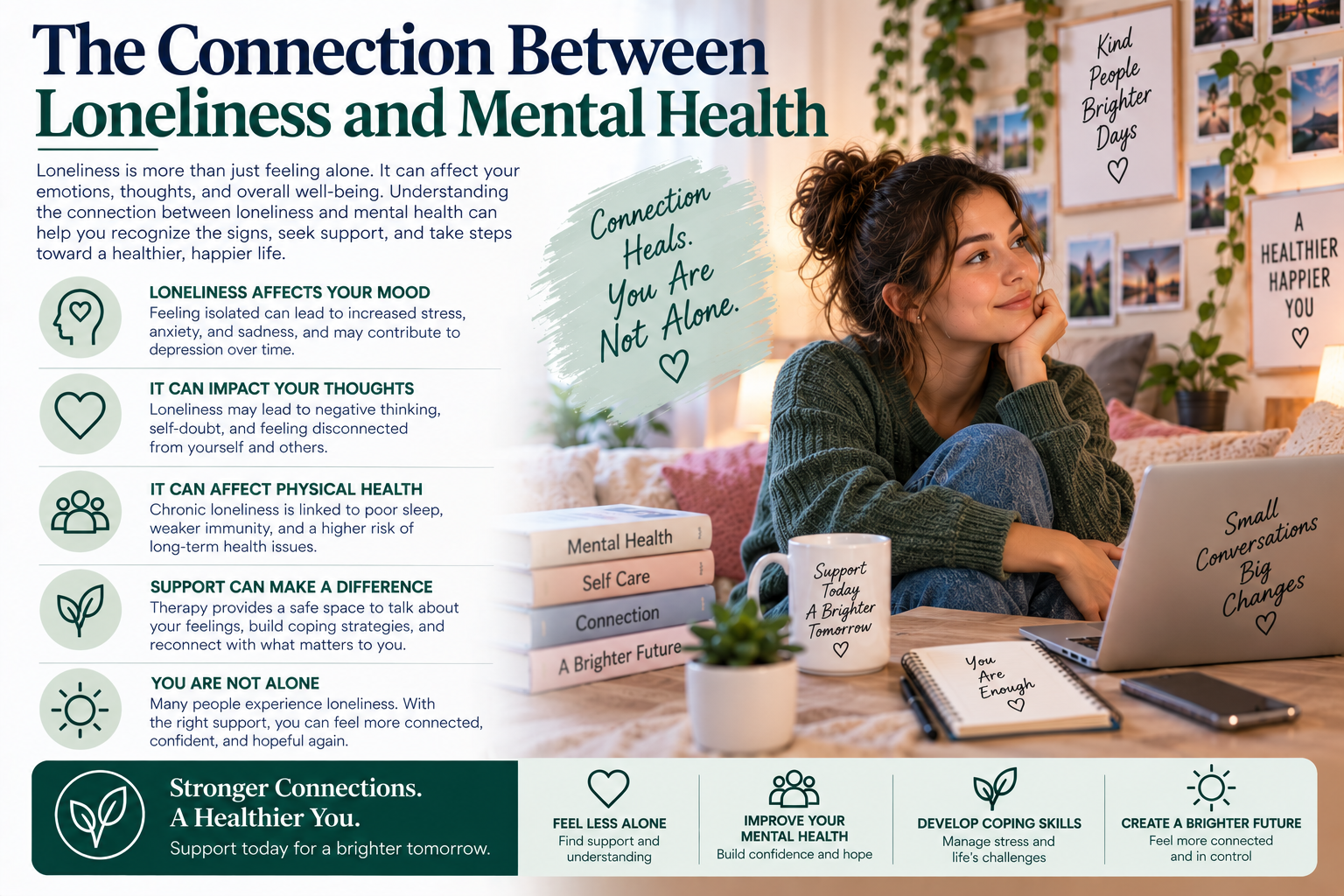
Loneliness is more than simply being alone. You can have friends, family, coworkers, or a partner and still feel deeply disconnected. Loneliness happens when the emotional connection you need does not match the connection you are experiencing.
For some people, loneliness appears after moving to a new city, ending a relationship, losing someone they love, starting college, retiring, becoming a parent, or going through a major life change. For others, it develops slowly, even while life looks busy from the outside.
Understanding the connection between loneliness and mental health can be an important first step toward feeling more connected.
What Is Loneliness?
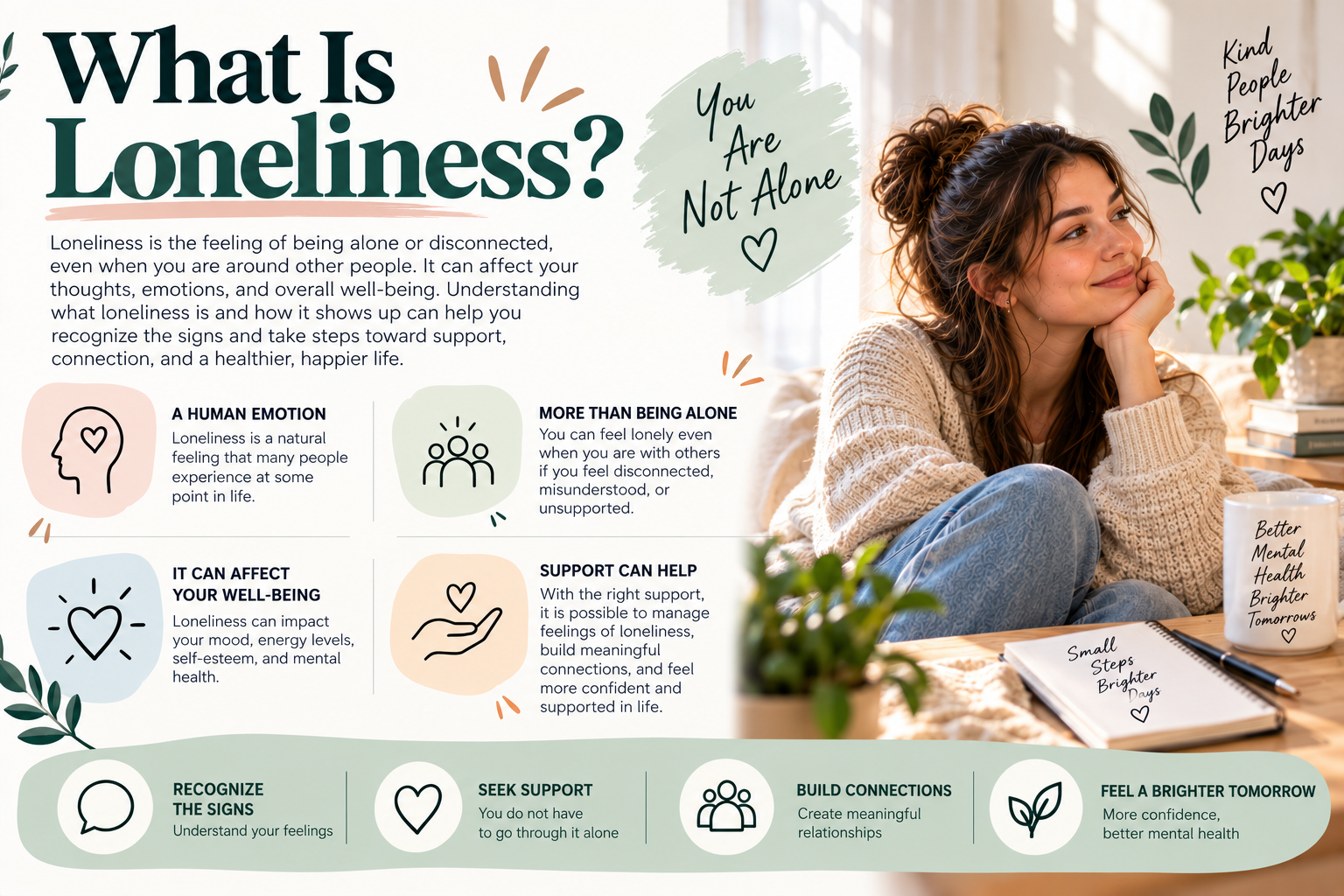
Being alone and feeling lonely are not the same thing. Solitude can be peaceful and restorative when it is chosen. Loneliness, however, often involves an unwanted feeling of isolation or disconnection.
You may experience loneliness as:
Feeling that nobody truly understands you
Wanting someone to talk to
Feeling left out or disconnected
Having people around but still feeling alone
Losing motivation to socialize
Believing that everyone else has meaningful relationships
Feeling emotionally distant from a partner or family
Loneliness can affect anyone, regardless of age or social situation.
How Loneliness Can Affect Mental Health
Long-lasting loneliness can influence emotional well-being. When people feel disconnected for an extended period, they may become more vulnerable to stress, anxiety, sadness, low self-esteem, and social withdrawal.
Loneliness and depression can also reinforce one another. Someone who feels depressed may stop contacting friends because they lack energy or motivation. That withdrawal can increase loneliness, which can then make depressive feelings stronger.
Anxiety can create a similar cycle. Someone may want meaningful relationships but fear rejection, embarrassment, or judgment. Avoiding social situations provides temporary relief, but it can increase feelings of isolation over time.
If loneliness is affecting your daily life, online mental health counseling in Florida can provide a supportive place to explore what you are experiencing.
Why You Can Feel Lonely Around Other People
Loneliness is not always about having too few people in your life.
You may have hundreds of social media connections but no one you feel comfortable calling when something is wrong. You may live with a partner but rarely discuss your emotions. You may work with people every day but feel that nobody knows the real you.
Meaningful connection usually involves more than frequent interaction. It can involve trust, emotional safety, understanding, acceptance, and the ability to be yourself.
This is why simply telling someone to "go out more" does not always solve loneliness.
Major Life Changes Can Increase Loneliness
Certain transitions can make loneliness more noticeable.
Moving away from family can remove familiar support systems. College students may struggle to find their place in a new environment. Retirement can remove daily social interaction. Becoming a parent can make it harder to maintain friendships. Divorce or separation can dramatically change someone's routines and relationships.
Grief can also create profound loneliness. After losing someone important, ordinary activities may feel different because the person who shared those moments is no longer there.
During these periods, it is important to recognize that loneliness does not mean you are failing. Sometimes your social world has changed, and rebuilding connection simply takes time.
The Loneliness Cycle
Loneliness can sometimes become self-reinforcing.
You may feel lonely and begin thinking:
"Nobody wants me around."
"People already have their own friends."
"I don't know what to say."
"Why would anyone want to hear from me?"
These thoughts can make reaching out feel risky. You may stop responding to messages, decline invitations, or avoid social activities.
The less you interact with people, the more isolated you may feel.
Breaking this cycle does not require completely changing your social life overnight. Small steps can matter.
Send one message. Make one phone call. Join one activity. Accept one invitation. Start with manageable actions rather than expecting immediate closeness.
How to Build Meaningful Connection
If you want to feel more connected, focus on quality rather than quantity.
Consider reconnecting with someone you trust. Instead of saying, "We should catch up sometime," suggest a specific day for coffee or a phone call.
You can also join activities based on your interests. Classes, volunteering, community groups, hobbies, exercise programs, and other shared activities can create opportunities to meet people naturally.
Remember that friendship usually develops gradually. One conversation does not have to become a lifelong friendship. Repeated contact gives people an opportunity to become comfortable with one another.
Don't Confuse Loneliness With Personal Failure
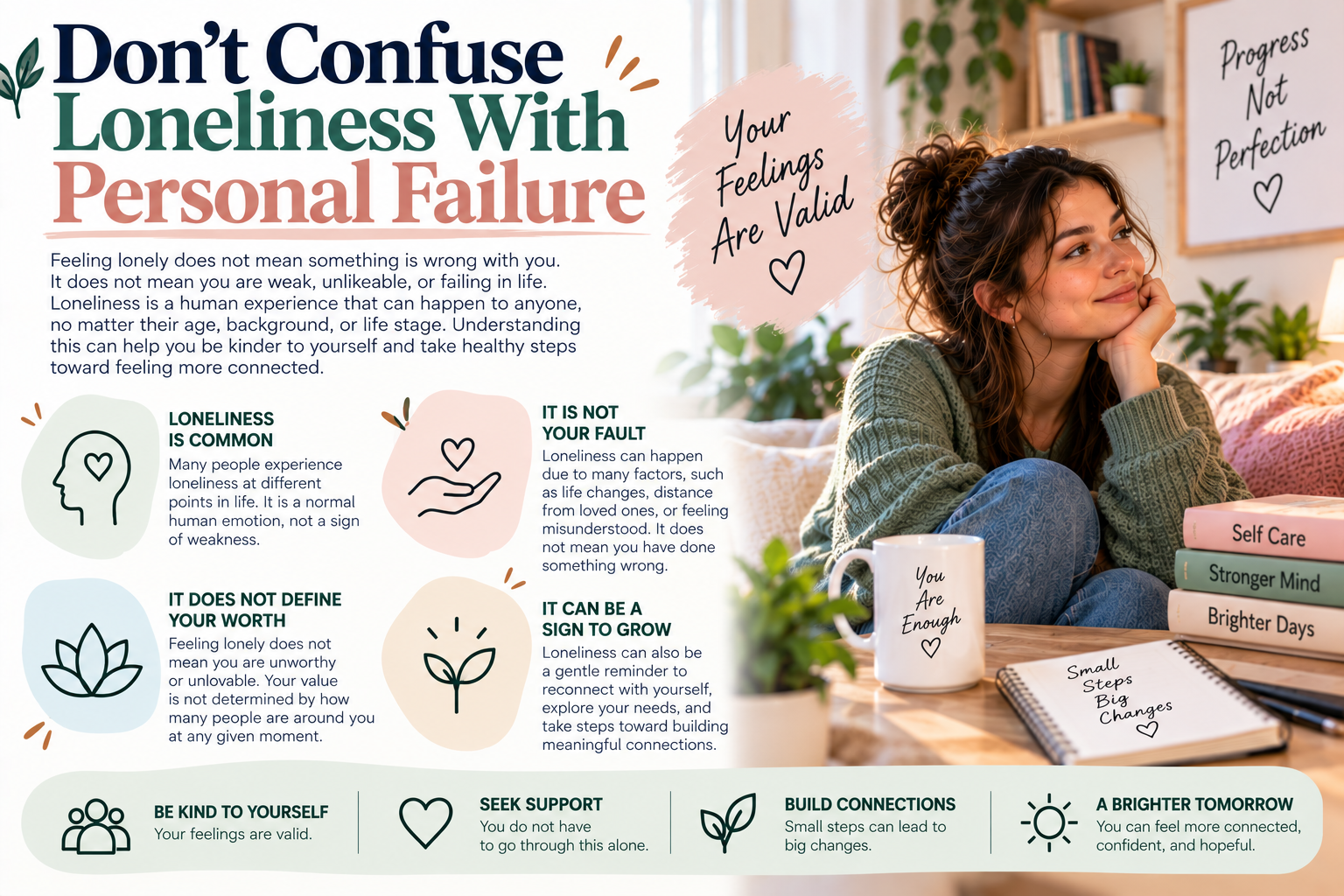
Feeling lonely does not mean something is wrong with you.
Your current circumstances may simply not provide the connection you need. You may be recovering from loss, adjusting to change, dealing with anxiety, or struggling with confidence.
Try not to turn loneliness into a judgment about your worth.
Instead of thinking, "Nobody likes me," consider, "I am not feeling connected right now."
That small change separates your identity from your current experience.
When Therapy May Help
Professional support may be helpful when loneliness becomes persistent or begins affecting your mood, sleep, work, relationships, or daily functioning.
Therapy can help you explore social anxiety, low self-esteem, grief, relationship patterns, depression, avoidance, communication difficulties, and major life transitions.
Through online therapy and counseling, you can have a supportive space to discuss difficult emotions from the comfort of your own environment.
At Let's Talk 4 Health, Michelle Albo, LMHC, MCAP, CTP, brings more than 35 years of experience to her work with clients. Counseling can provide an opportunity to better understand emotional challenges and develop healthier ways of coping and connecting.
Frequently Asked Questions
Can you be lonely even if you have friends?
Yes. Loneliness is about how connected you feel, not simply how many people are around you.
Is being alone unhealthy?
Not necessarily. Healthy solitude can be restorative. Loneliness is different because it involves unwanted emotional disconnection.
Can loneliness cause anxiety?
Loneliness and anxiety can influence each other. Feeling disconnected may increase worry, while anxiety can make social interaction more difficult.
Can therapy help with loneliness?
Therapy can help you understand why you feel disconnected and explore patterns involving anxiety, confidence, relationships, grief, or avoidance.
You Don't Have to Stay Alone With Loneliness
Loneliness can make your world feel smaller, but it does not have to define your future.
Connection often begins with one small step: reaching out, joining something, asking for support, or being honest about how you feel.
If loneliness has become difficult to manage, Florida online mental health counseling can give you a supportive place to begin.
You do not have to figure everything out at once. Sometimes the first step toward feeling less alone is simply allowing yourself to say, "I need connection, and I deserve support."