
Emotional Clutter: How Unprocessed Feelings Weigh on Your Mind
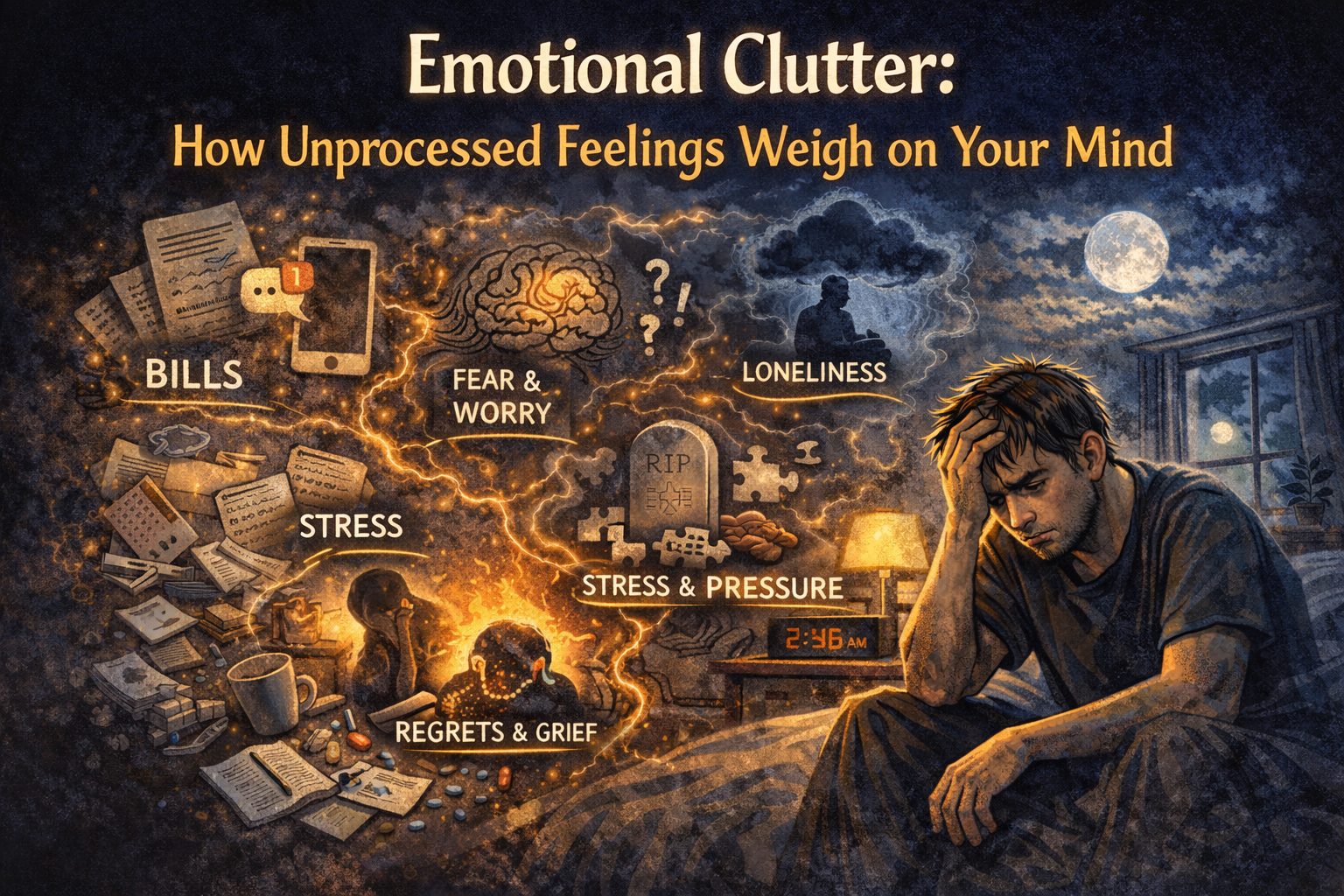
Most people understand physical clutter. When a space becomes crowded, it feels harder to think clearly or relax. Emotional clutter works the same way. Unprocessed feelings accumulate quietly in the background, taking up mental space and draining energy.
You may not always notice emotional buildup in the moment. Instead, it shows up as irritability, brain fog, exhaustion, or a sense of heaviness you cannot fully explain. Over time, avoidance and suppression create a growing internal load.
Understanding emotional clutter helps reduce shame and create a path toward relief. At Let’s Talk 4 Health, we often help individuals identify emotional buildup that has gone unaddressed for months or even years. You can learn more about our approach by visiting our home page.
What Emotional Clutter Really Is
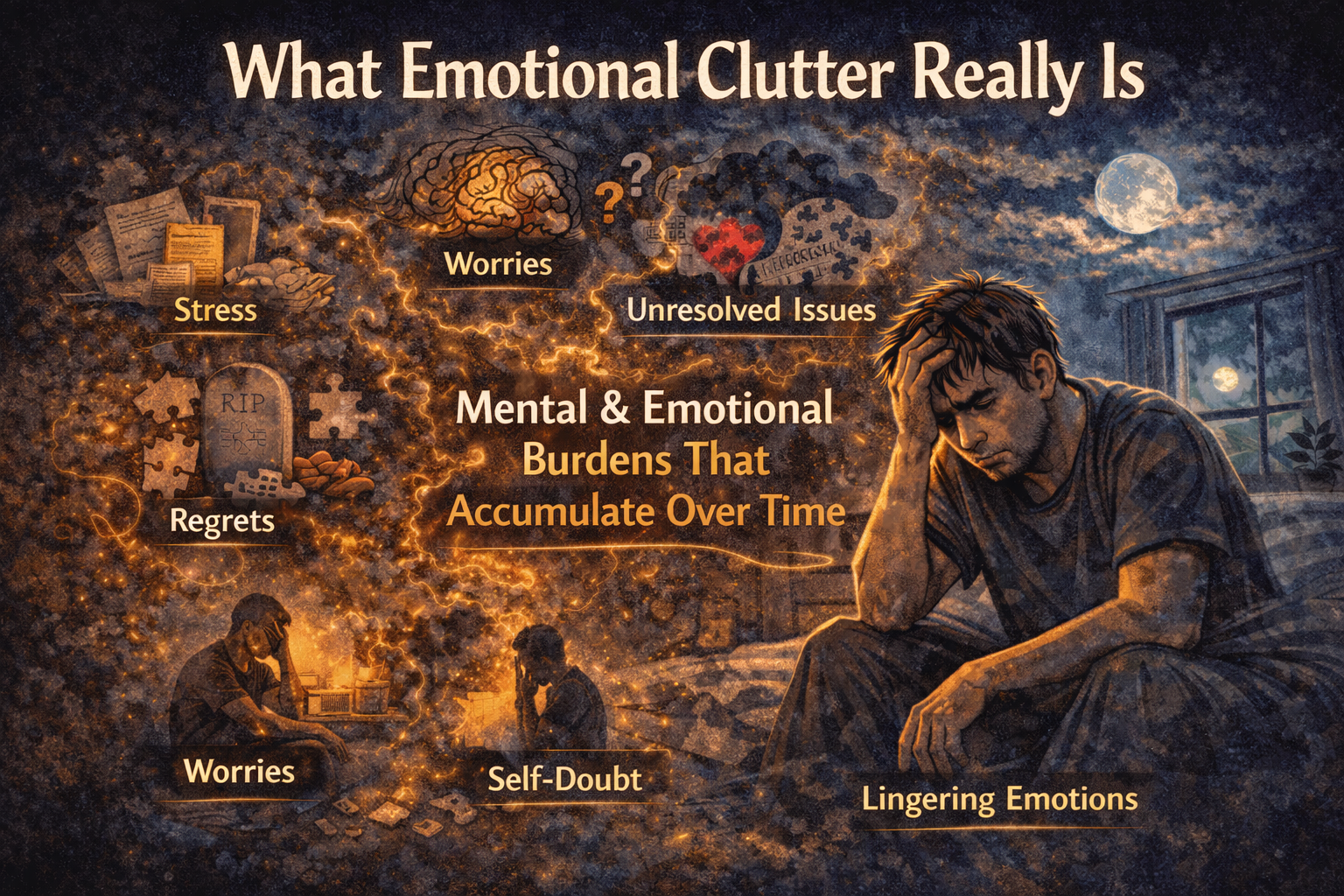
Emotional clutter refers to feelings that were never fully processed. These may include:
Disappointment from unmet expectations
Resentment from overextending
Grief that was pushed aside
Anxiety that was minimized
Conversations that were never resolved
When emotions are not acknowledged, the brain stores them as unfinished business. The nervous system continues to hold tension around what was left unsaid or unfelt.
Over time, this buildup contributes to mental fatigue and emotional overwhelm. Support through Florida online mental health counseling can help untangle these stored experiences.
Why Avoidance Feels Easier in the Short Term
Avoiding difficult emotions often feels protective. When you are busy or under pressure, pushing feelings aside allows you to keep functioning.
The brain prioritizes productivity and stability. If pausing to process emotions feels risky or disruptive, avoidance becomes the default.
The challenge is that avoided emotions do not disappear. They resurface later, often at inconvenient times, such as at night or during quiet moments.
Learning to gently approach emotions rather than suppress them is part of the work in Florida telemental health therapy.
Signs Emotional Clutter Is Weighing on You
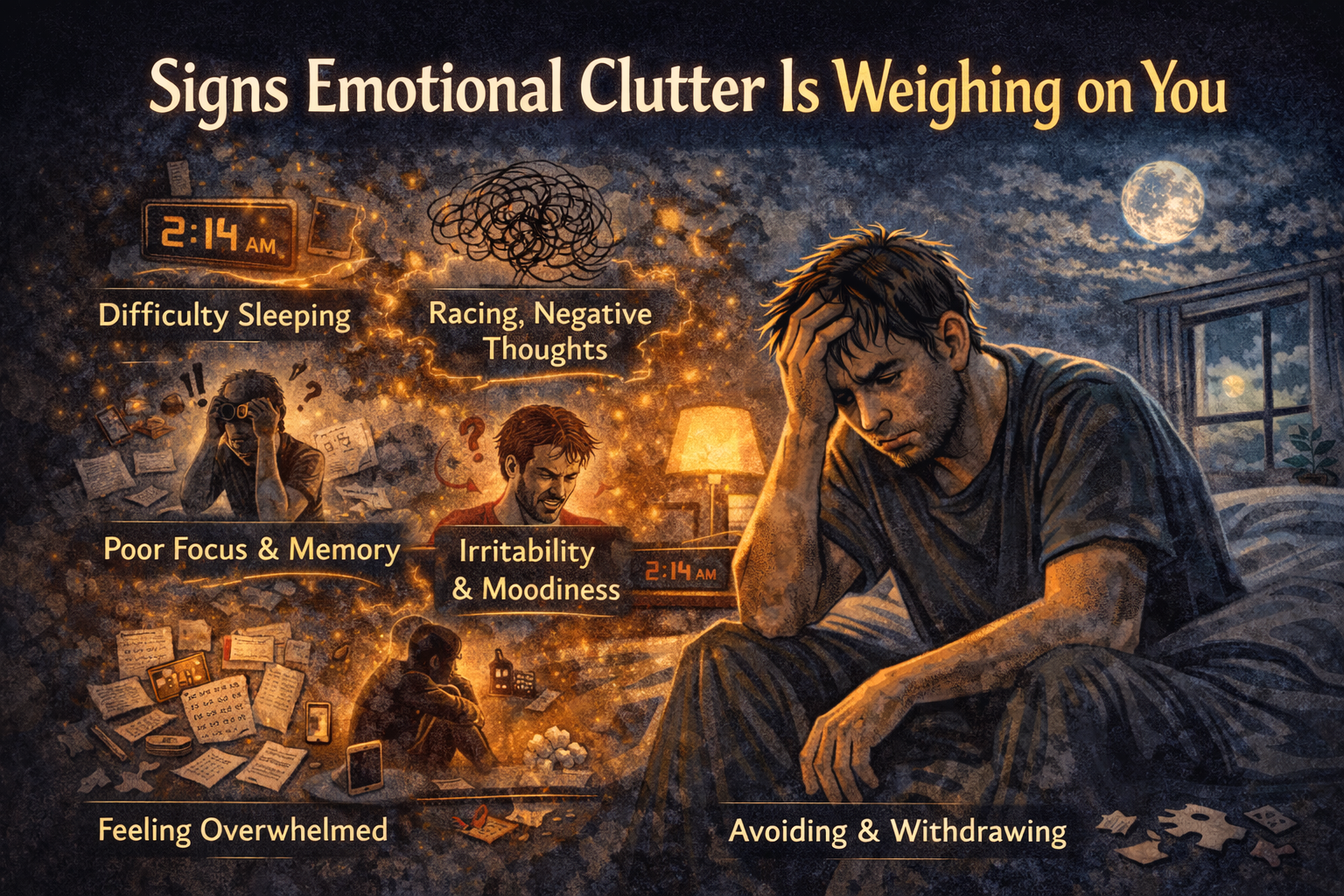
Emotional buildup often shows up indirectly. You may notice:
Irritability over small things
Feeling overwhelmed by routine tasks
Difficulty concentrating
Emotional numbness
Increased anxiety without clear cause
Physical tension or fatigue
These are signals that your system may be carrying more than it has processed.
Understanding these patterns can help you respond with curiosity rather than self criticism.
The Mental Load of Unprocessed Feelings
Emotional clutter adds to mental load. The brain constantly scans unfinished emotional experiences, even if you are not consciously thinking about them.
This background processing consumes energy. It can reduce focus, decrease resilience, and make daily stressors feel larger than they are.
Clearing emotional clutter does not require dramatic confrontation. It requires small, consistent moments of awareness.
Many individuals begin this process through online therapy in Florida.
Reflective Practices to Reduce Emotional Buildup
Emotional clarity develops through reflection. These practices help gently surface what has been pushed aside.
1. Daily Emotional Check Ins
Take a few minutes to ask:
What am I feeling right now?
What happened today that stayed with me?
Is there anything I am carrying into tomorrow?
Naming emotions reduces their intensity and prevents accumulation.
2. Journaling Without Editing
Write freely for a few minutes without worrying about grammar or solutions. The goal is expression, not problem solving.
3. Body Awareness
Notice physical sensations such as tightness or heaviness. The body often holds emotion before the mind identifies it.
These practices build emotional awareness gradually.
Emotional Reset Techniques
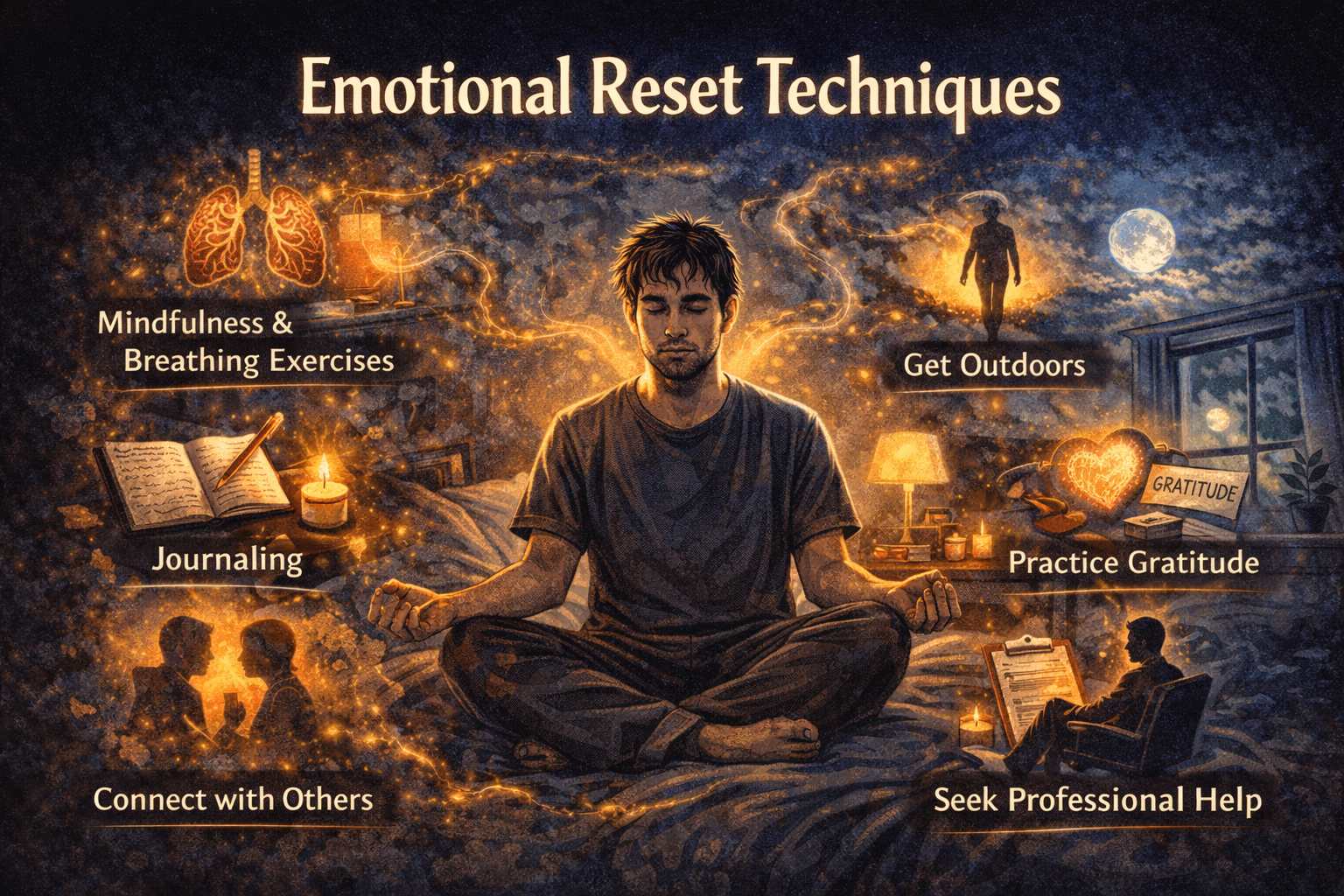
When emotional clutter feels heavy, gentle reset techniques can help.
Create intentional processing time
Set aside space during the week to reflect, rather than waiting for emotions to surface unexpectedly.
Have clarifying conversations when appropriate
Some emotional buildup comes from unresolved communication. Addressing issues calmly can release tension.
Practice nervous system regulation
Slow breathing, stretching, and grounding exercises help the body feel safe while emotions surface.
Limit overload
Reducing commitments and sensory input creates space for emotional processing.
Many individuals learn to combine these tools effectively through Florida telemental health services.
When Emotional Clutter Connects to Anxiety or Burnout
If emotional buildup has been present for a long time, it may contribute to chronic stress, anxiety, or burnout. When the nervous system stays activated due to unresolved emotions, rest becomes difficult and irritability increases.
Addressing emotional clutter often improves sleep, focus, and overall mood. For individuals who want structured support in rebuilding emotional capacity, online mental health coaching in Florida may be helpful.
When Professional Support Can Help
Sometimes emotional clutter is tied to trauma, grief, or long standing relational patterns. In these cases, professional guidance provides safety and structure.
You can review common questions about starting therapy on our telehealth therapy FAQs page. If you are ready to begin, you can reach out through our contact page for anxiety and depression support.
Why Choose Let’s Talk 4 Health
Let’s Talk 4 Health offers compassionate, evidence based care for individuals navigating emotional overwhelm and mental fatigue. With over 35 years of experience, Michelle Albo, LMHC, MCAP, CTP, leads the practice with a focus on sustainable emotional wellbeing.
You can learn more about our providers by visiting our meet our team page. For information on confidentiality and privacy, please review our privacy policy.
Clearing Emotional Space Is a Form of Self Care
Emotional clutter does not mean you are failing. It means you have been carrying more than you have processed. Small, consistent reflection creates space for clarity and steadiness.
You do not have to unpack everything at once. With patience and support, emotional weight can lighten, and your mind can feel clearer and more balanced again.