
Therapy vs. Life Coaching: Understanding the Key Differences
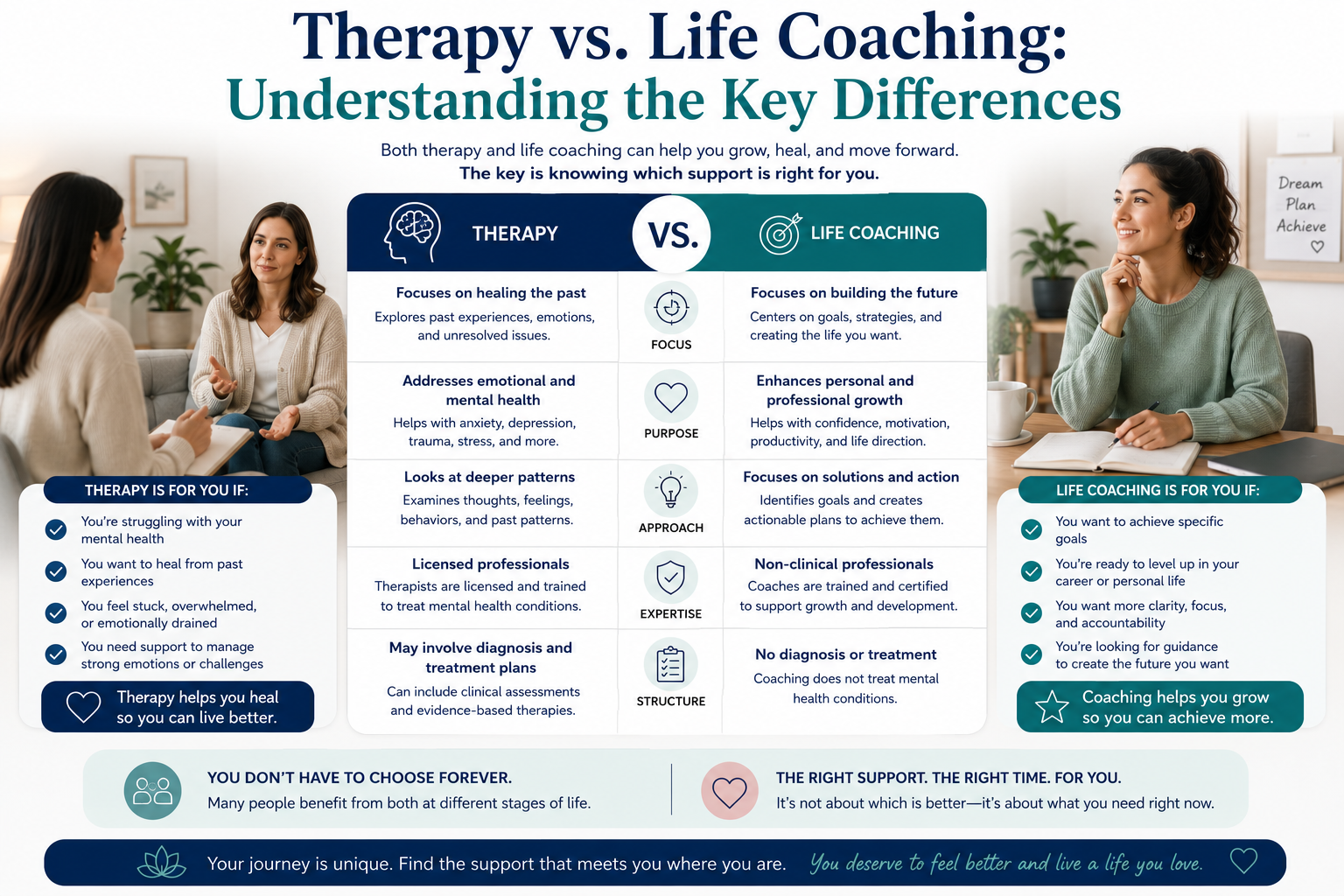
When you're looking for support, it's common to come across both therapy and life coaching. At first glance, they may seem similar. Both involve conversations, goal setting, personal growth, and working with a professional to improve your life.
However, therapy and life coaching serve different purposes. Understanding those differences can help you choose the type of support that best matches your needs.
Some people benefit most from therapy, while others find coaching aligns with their goals. In some cases, individuals use both at different stages of their personal journey.
At Let’s Talk 4 Health, we offer both professional mental health counseling and coaching services, helping clients receive the right type of support based on where they are in life. You can learn more about our approach by visiting our home page.
What Is Therapy?
Therapy, also known as counseling or psychotherapy, is provided by licensed mental health professionals who are trained to assess, diagnose, and treat emotional and mental health conditions.
Therapy focuses on helping individuals understand their thoughts, emotions, behaviors, and life experiences. It often explores how past experiences influence present challenges while teaching practical coping skills for healthier emotional functioning.
People seek therapy for many reasons, including:
Anxiety
Depression
Burnout
Trauma
Grief and loss
Relationship difficulties
Stress management
Emotional overwhelm
Life transitions
Therapy provides a safe, confidential environment where you can process emotions without judgment while learning healthier ways to cope.
At Let’s Talk 4 Health, Florida online mental health counseling offers compassionate, evidence based care tailored to each client's unique experiences.
What Is Life Coaching?
Life coaching is future focused and action oriented.
Rather than treating mental health conditions, coaching helps individuals clarify goals, improve performance, increase accountability, and develop strategies for personal or professional growth.
Life coaching often focuses on questions such as:
Where do I want my life to go?
How can I become more confident?
How do I stay motivated?
How can I improve my habits?
How do I reach my goals?
Coaching emphasizes forward movement and practical planning rather than diagnosing or treating emotional disorders.
Individuals often seek coaching for:
Career development
Leadership growth
Confidence building
Goal achievement
Time management
Personal development
Lifestyle changes
Accountability
You can learn more about these services through online mental health coaching in Florida.
The Biggest Difference Between Therapy and Coaching
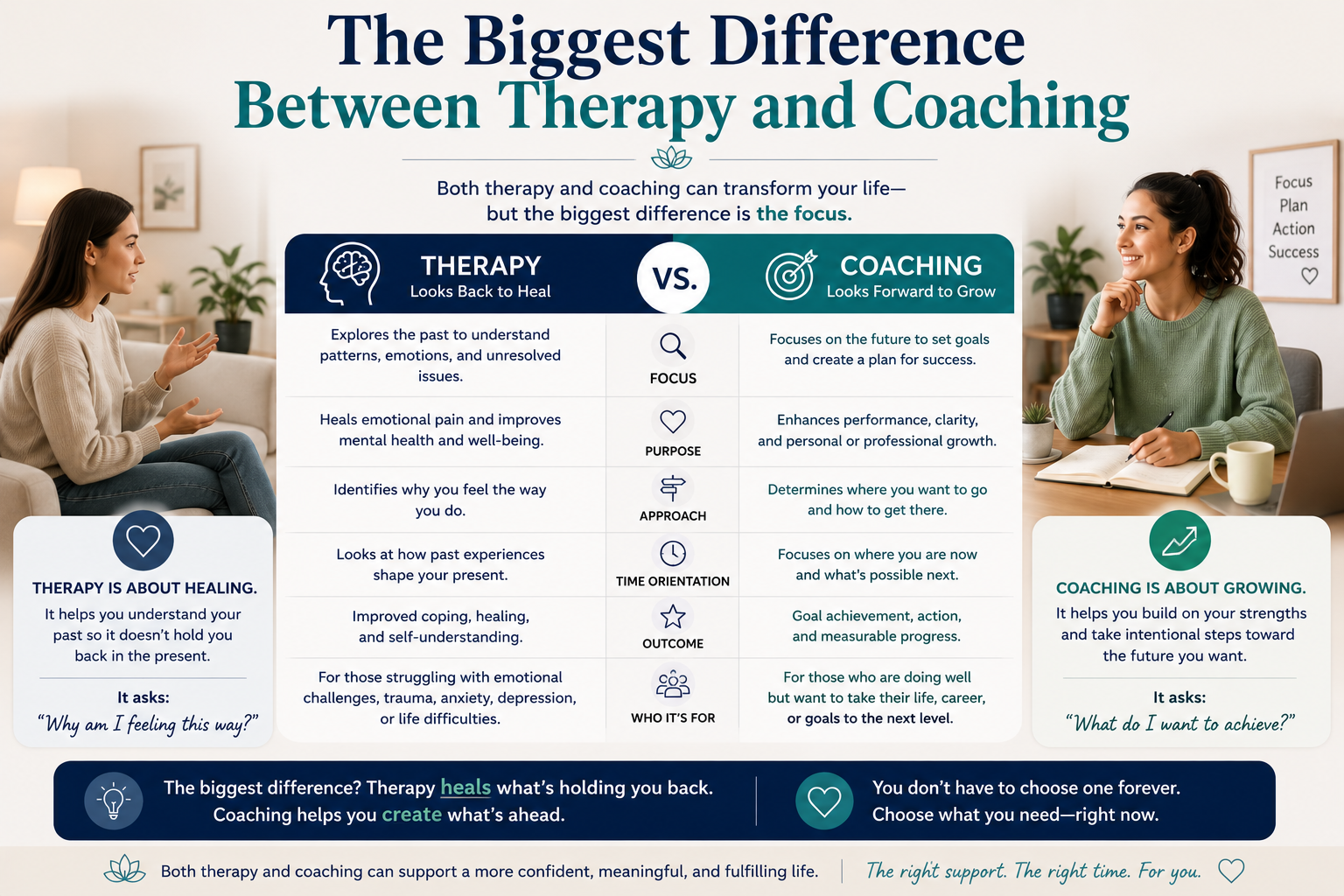
The primary difference lies in the purpose of the relationship.
Therapy Helps You Heal
Therapy focuses on emotional wellbeing and mental health.
A therapist helps you understand emotional patterns, process difficult experiences, reduce symptoms, and develop healthier coping skills.
Therapy often asks:
Why am I feeling this way?
What patterns are affecting my life?
How can I improve my emotional wellbeing?
Coaching Helps You Grow
Coaching focuses on where you want to go next.
A coach helps you clarify goals, build motivation, improve habits, and create action plans.
Coaching often asks:
What do you want to achieve?
What is getting in your way?
What actions will move you forward?
Both approaches support growth, but they begin from different starting points.
Therapy Addresses Mental Health
Licensed therapists are trained to help individuals experiencing:
Anxiety disorders
Depression
Trauma and PTSD
Panic attacks
Chronic stress
Grief
Relationship concerns
Burnout
Emotional regulation challenges
Therapists also help clients understand how the nervous system, emotions, and past experiences influence current behaviors.
Many individuals learn these skills through Florida telemental health therapy.
Coaching Focuses on Performance and Personal Development
Coaching is generally appropriate when someone is emotionally stable but wants additional structure, accountability, or direction.
Examples include:
Building confidence
Developing leadership skills
Improving work-life balance
Creating healthier routines
Reaching career goals
Increasing motivation
Managing personal growth
Coaching does not diagnose or treat mental health conditions.
Instead, it helps clients maximize strengths and move toward meaningful goals.
Can Therapy and Coaching Work Together?
Yes.
Many people benefit from both services at different points in their lives.
For example:
Someone experiencing anxiety and burnout may begin with therapy to improve emotional wellbeing and nervous system regulation.
Later, once symptoms are more manageable, coaching may help them establish career goals, improve productivity, or develop healthier habits.
The two approaches can complement each other when used appropriately.
How to Know Which One Is Right for You
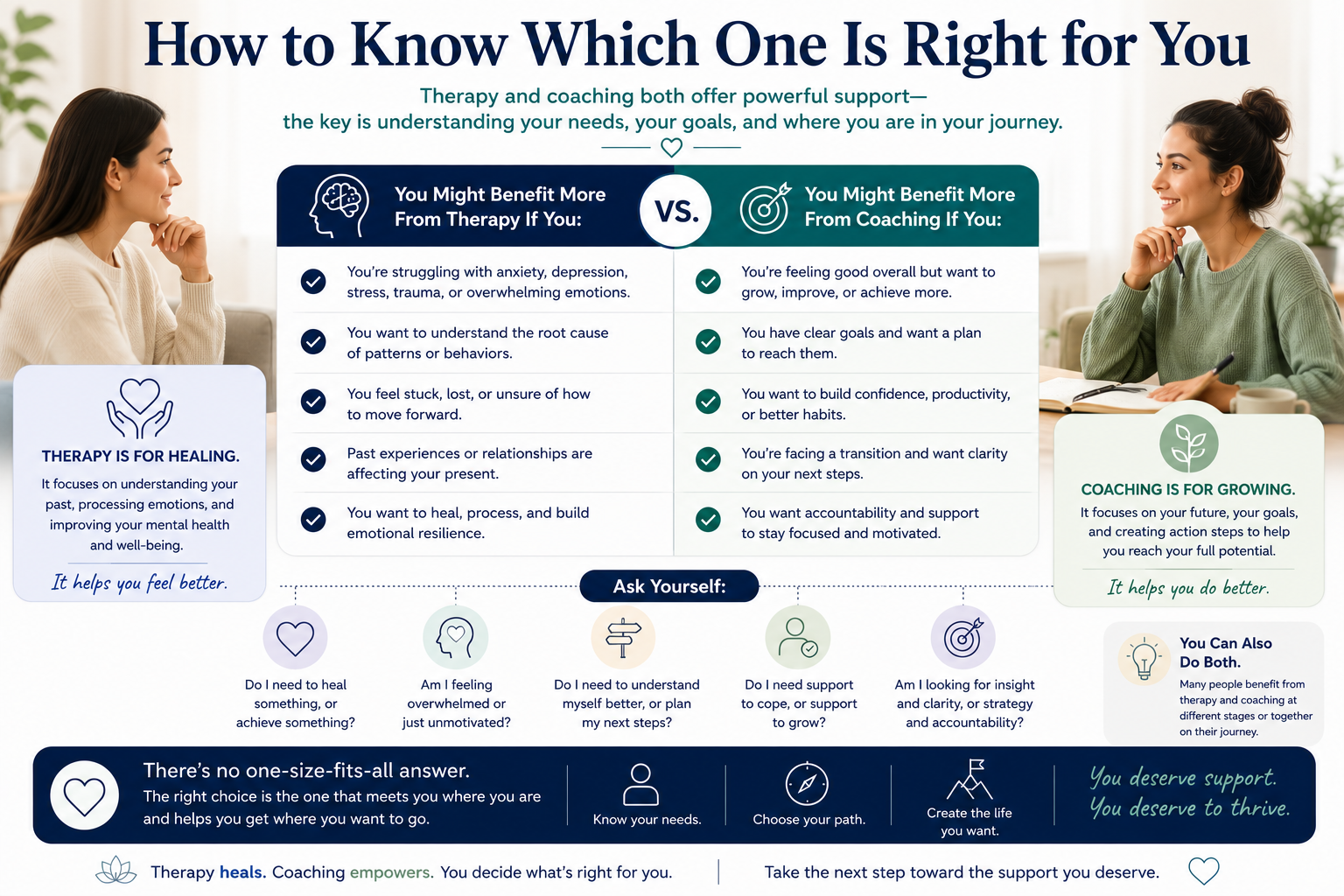
Therapy may be the better choice if you are experiencing:
Anxiety
Depression
Emotional overwhelm
Burnout
Trauma
Grief
Relationship struggles
Difficulty managing emotions
Persistent stress affecting daily life
Support through Florida online mental health counseling provides evidence based care for these concerns.
Coaching may be the better choice if you:
Want greater accountability
Feel stuck professionally
Want to improve confidence
Need help setting achievable goals
Want to improve habits or routines
Are focused on future growth rather than emotional healing
These goals are often addressed through online mental health coaching in Florida.
What If You're Not Sure?
Many people are uncertain whether therapy or coaching is the better fit.
That is completely normal.
An experienced mental health professional can help determine which approach best matches your current needs.
Sometimes the answer is therapy.
Sometimes it is coaching.
Sometimes it is a combination over time.
The important thing is finding support that aligns with your goals rather than trying to figure everything out alone.
What to Expect From Therapy
If therapy is the right choice, sessions may include:
Exploring current challenges
Understanding emotional patterns
Learning coping strategies
Managing anxiety and stress
Building healthier relationships
Improving emotional regulation
Developing resilience
Therapy is collaborative, supportive, and tailored to your unique experiences.
You can review common questions about the process on our telehealth therapy FAQs page.
Why Choose Let’s Talk 4 Health?
At Let’s Talk 4 Health, we understand that every person's journey is different. Some individuals need space to heal. Others need support creating meaningful change. Many need both at different stages of life.
With more than 35 years of experience, Michelle Albo, LMHC, MCAP, CTP, provides compassionate, evidence based care that meets clients where they are and helps them move forward with confidence.
You can learn more about our background by visiting our meet our team page.
When you are ready to begin, you can schedule your first appointment through our contact page for anxiety and depression support.
For information about confidentiality and how your information is protected, please review our privacy policy.
The Right Support Depends on Your Goals
Therapy and life coaching are not competitors. They are different tools designed to meet different needs.
If you are working through anxiety, depression, trauma, burnout, or emotional challenges, therapy provides the clinical support needed to heal and build resilience.
If you are emotionally well but want greater clarity, accountability, and direction, coaching can help you move toward your personal or professional goals.
Whatever path you choose, seeking support is a sign of strength. Investing in your mental health and personal growth is one of the most valuable investments you can make, and finding the right type of support is the first step toward a healthier, more fulfilling life.
What First Time Therapy Clients Often Discover
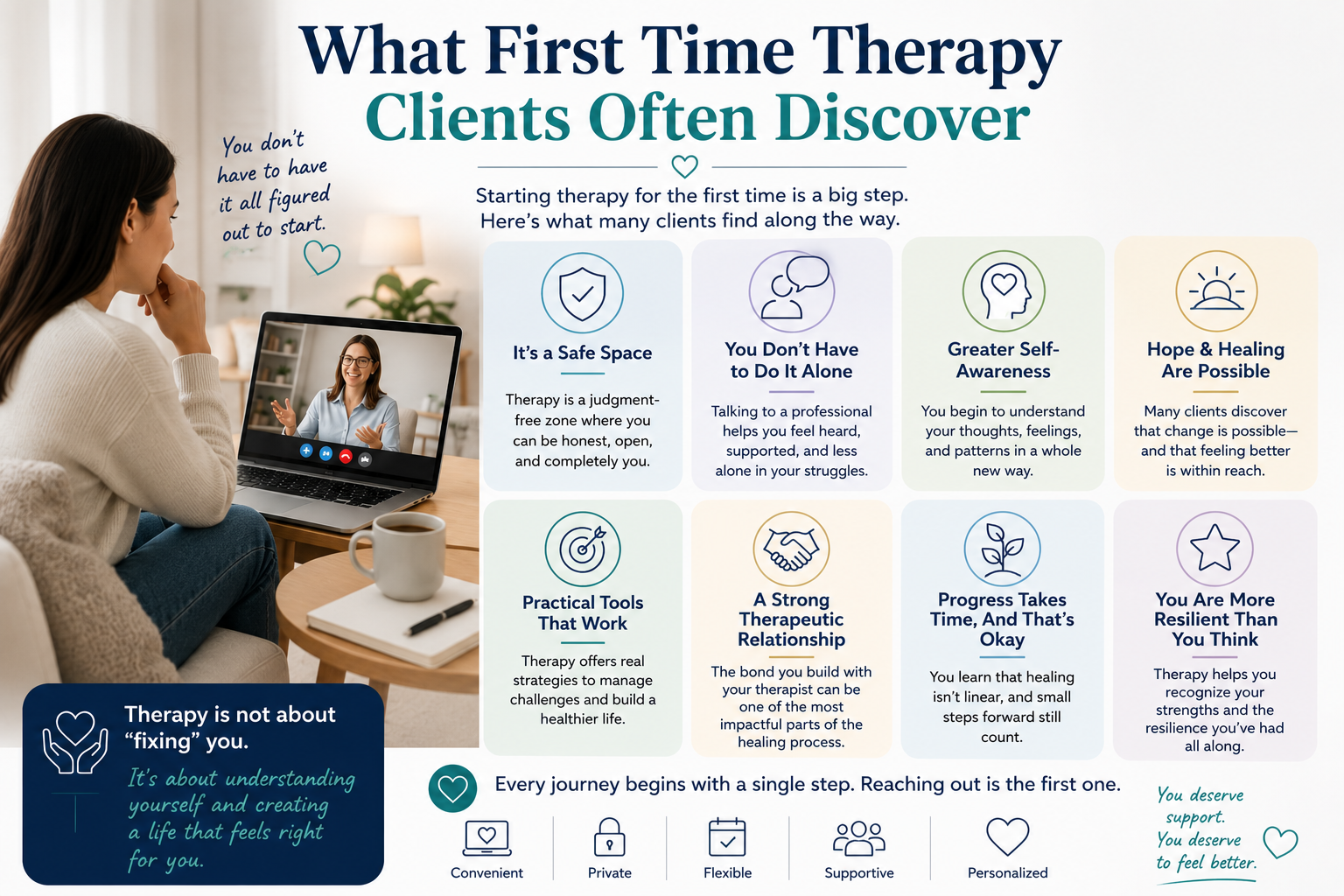
Many people begin therapy uncertain about whether online counseling will feel natural.
After just a few sessions, they often realize:
The conversations feel genuine and personal.
They appreciate not having to commute.
They are more likely to attend appointments consistently.
Being at home helps them feel more relaxed.
Most importantly, they discover that meaningful healing depends on the quality of the therapeutic relationship, not the location where it happens.
If you're considering therapy for the first time, you can find answers to common questions on our telehealth therapy FAQs page.
Why Choose Let’s Talk 4 Health
At Let’s Talk 4 Health, we provide compassionate, evidence based online therapy for individuals experiencing anxiety, depression, burnout, stress, relationship challenges, and life transitions. With more than 35 years of experience, Michelle Albo, LMHC, MCAP, CTP, helps clients develop practical tools for lasting emotional wellbeing and nervous system regulation.
You can learn more about our approach by visiting our meet our team page.
When you're ready to begin, you can schedule your first appointment through our contact page for anxiety and depression support.
The Right Therapy Is the One You'll Actually Use
Choosing between online therapy and in person therapy is not about finding the perfect format. It is about choosing the one that fits your life, supports your needs, and helps you stay committed to your mental health.
If flexibility, convenience, and accessibility matter most, online therapy may be an excellent choice. If you prefer a dedicated office environment and face to face interaction, in person therapy may feel like the better fit.
What matters most is not where therapy happens, but that you take the first step toward getting the support you deserve.
Your mental health is worth making time for, and finding the right type of therapy is the beginning of a healthier, more balanced future.