
Rebuilding Trust Through Online Relationship Counseling
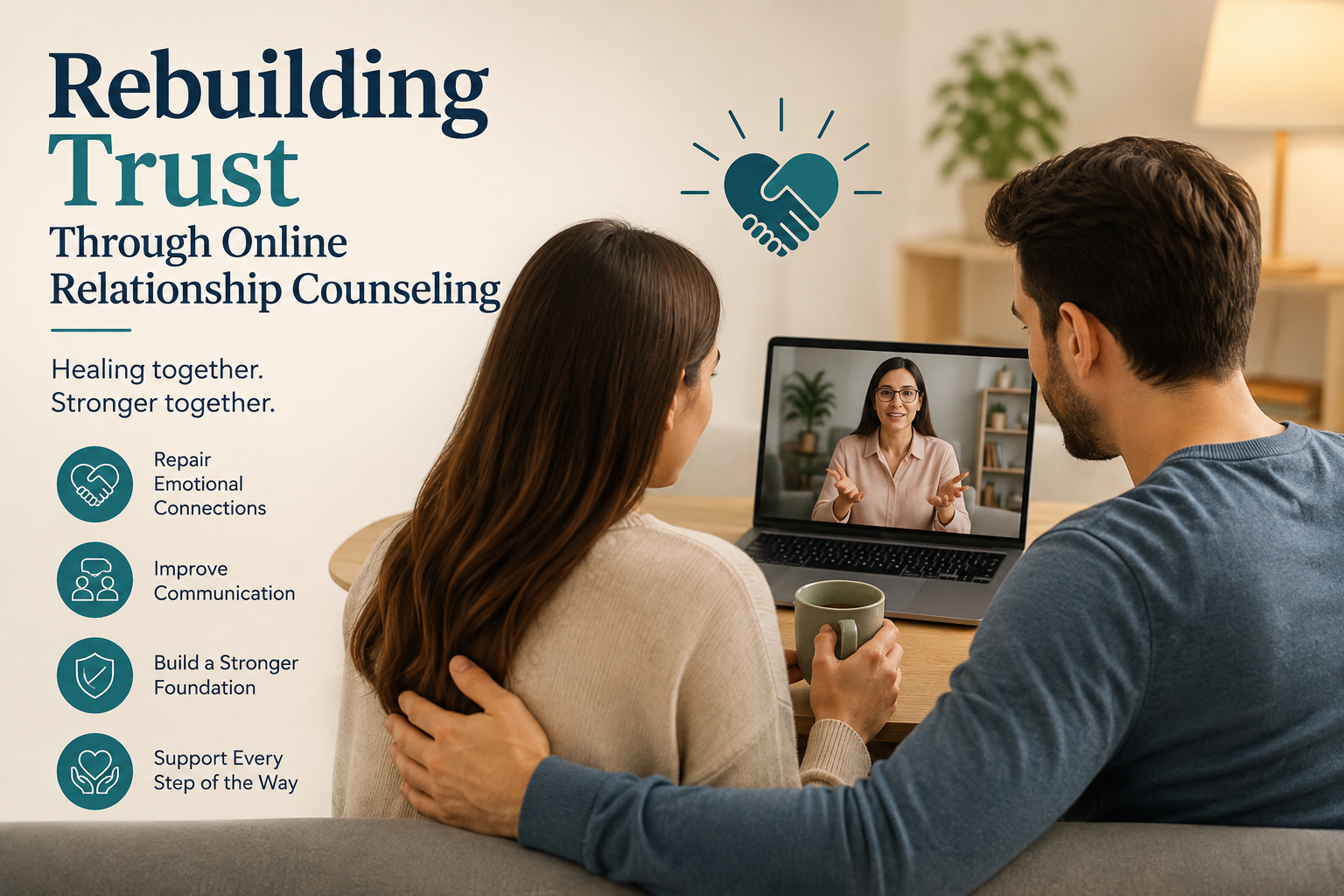
Trust is one of the foundations of a healthy relationship. When trust is strong, partners can usually communicate more openly, feel emotionally secure, and move through disagreements without constantly questioning each other's intentions.
When trust is damaged, however, even ordinary interactions can become difficult.
A delayed text message may create worry. A simple disagreement may bring up old hurt. One partner may ask for reassurance while the other feels frustrated by having to repeatedly prove themselves. Over time, both people can become exhausted by the cycle.
Rebuilding trust takes more than saying "I'm sorry" or deciding to move on. It requires consistency, honesty, accountability, emotional safety, and a willingness to understand what happened and how it affected the relationship.
Online relationship counseling can provide a structured space for couples to begin that process. Instead of trying to resolve painful issues alone, partners can work with a therapist who can help them slow down conflict, communicate more effectively, and understand the patterns keeping them stuck.
At Let’s Talk 4 Health, we provide compassionate online counseling for individuals and couples navigating relationship stress, communication difficulties, anxiety, and emotional disconnection. You can learn more about our approach by visiting our home page.
What Happens When Trust Is Broken?
Trust can be damaged in many different ways.
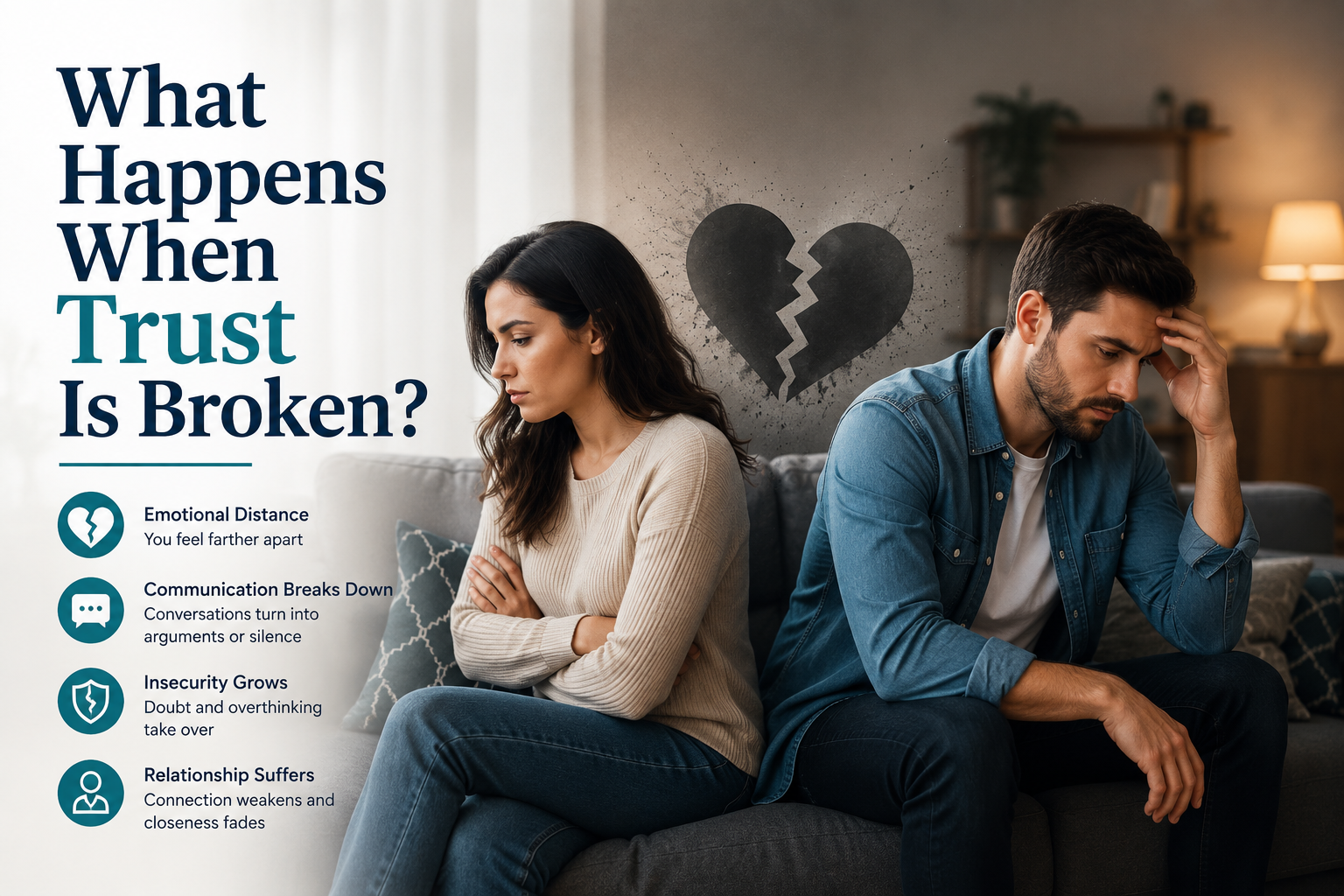
Sometimes there is a major event, such as infidelity, dishonesty, or a significant breach of confidence. Other times, trust deteriorates slowly through repeated disappointments, broken promises, emotional distance, or poor communication.
The result can be similar.
The partner who has been hurt may become more vigilant. They may look for signs that something is wrong or repeatedly seek reassurance.
The other partner may feel that nothing they do is enough and become defensive or withdrawn.
This creates a cycle:
Hurt leads to fear. Fear leads to checking or questioning. Questioning leads to defensiveness. Defensiveness creates more distance. Distance creates more uncertainty.
Breaking this cycle is an important part of relationship counseling.
Support through Florida online mental health counseling can provide a safe environment to begin understanding these patterns.
Trust Is More Than Believing Someone
Trust is sometimes described as simply believing that your partner is telling the truth.
It is much broader than that.
Trust can involve feeling confident that your partner will:
Listen to your concerns
Respect your boundaries
Follow through on commitments
Be honest about difficult subjects
Consider your feelings
Take responsibility for mistakes
Remain emotionally present during difficult conversations
When these experiences happen consistently, trust gradually becomes stronger.
When they repeatedly do not happen, emotional safety can begin to disappear.
Why Rebuilding Trust Takes Time
After trust has been damaged, people often want immediate reassurance.
The hurt partner may think:
"Why can't I just get over this?"
The other partner may think:
"How long am I going to have to keep proving myself?"
Neither question necessarily creates healing.
Trust is rebuilt through repeated experiences, not one conversation.
A sincere apology can be an important beginning, but rebuilding requires continued behavior that demonstrates reliability. The person who was hurt may also need time before their nervous system stops expecting another disappointment.
This is why patience matters.
Online relationship counseling can help couples work through this process without turning every conversation into another argument.
Can Therapy and Coaching Work Together?
Yes.
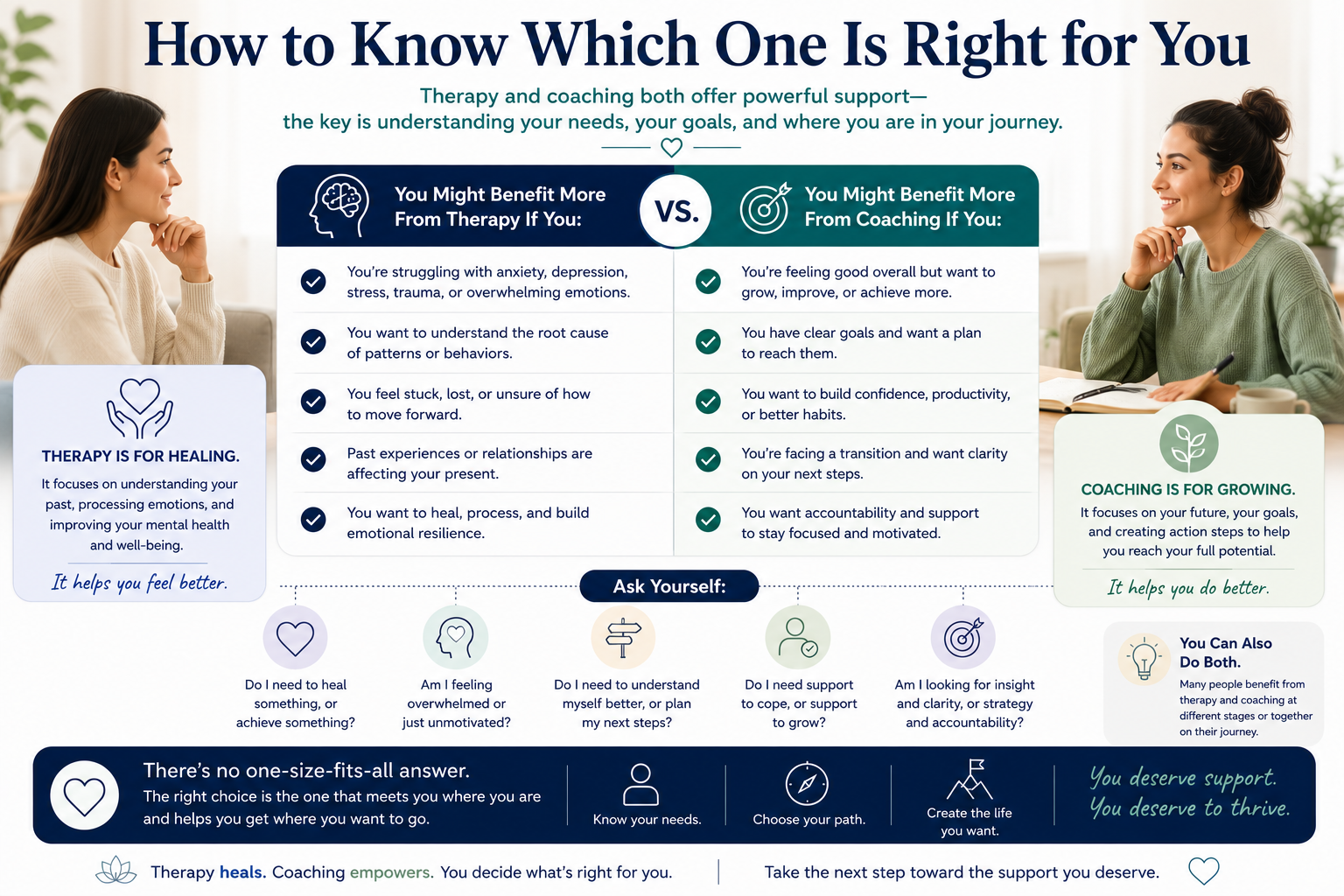
Many people benefit from both services at different points in their lives.
For example:
Someone experiencing anxiety and burnout may begin with therapy to improve emotional wellbeing and nervous system regulation.
Later, once symptoms are more manageable, coaching may help them establish career goals, improve productivity, or develop healthier habits.
The two approaches can complement each other when used appropriately.
How to Know Which One Is Right for You
Therapy may be the better choice if you are experiencing:
Anxiety
Depression
Emotional overwhelm
Burnout
Trauma
Grief
Relationship struggles
Difficulty managing emotions
Persistent stress affecting daily life
Support throughFlorida online mental health counseling provides evidence based care for these concerns.
Coaching may be the better choice if you:
Want greater accountability
Feel stuck professionally
Want to improve confidence
Need help setting achievable goals
Want to improve habits or routines
Are focused on future growth rather than emotional healing
These goals are often addressed throughonline mental health coaching in Florida.
What If You're Not Sure?
Many people are uncertain whether therapy or coaching is the better fit.
That is completely normal.
An experienced mental health professional can help determine which approach best matches your current needs.
Sometimes the answer is therapy.
Sometimes it is coaching.
Sometimes it is a combination over time.
The important thing is finding support that aligns with your goals rather than trying to figure everything out alone.
What to Expect From Therapy
If therapy is the right choice, sessions may include:
Exploring current challenges
Understanding emotional patterns
Learning coping strategies
Managing anxiety and stress
Building healthier relationships
Improving emotional regulation
Developing resilience
Therapy is collaborative, supportive, and tailored to your unique experiences.
You can review common questions about the process on ourtelehealth therapy FAQs page.
Why Choose Let’s Talk 4 Health?
At Let’s Talk 4 Health, we understand that every person's journey is different. Some individuals need space to heal. Others need support creating meaningful change. Many need both at different stages of life.
With more than 35 years of experience, Michelle Albo, LMHC, MCAP, CTP, provides compassionate, evidence based care that meets clients where they are and helps them move forward with confidence.
You can learn more about our background by visiting ourmeet our team page.
When you are ready to begin, you can schedule your first appointment through ourcontact page for anxiety and depression support.
For information about confidentiality and how your information is protected, please review ourprivacy policy.
The Right Support Depends on Your Goals
Therapy and life coaching are not competitors. They are different tools designed to meet different needs.
If you are working through anxiety, depression, trauma, burnout, or emotional challenges, therapy provides the clinical support needed to heal and build resilience.
If you are emotionally well but want greater clarity, accountability, and direction, coaching can help you move toward your personal or professional goals.
Whatever path you choose, seeking support is a sign of strength. Investing in your mental health and personal growth is one of the most valuable investments you can make, and finding the right type of support is the first step toward a healthier, more fulfilling life.
The Nervous System and Relationship Trust
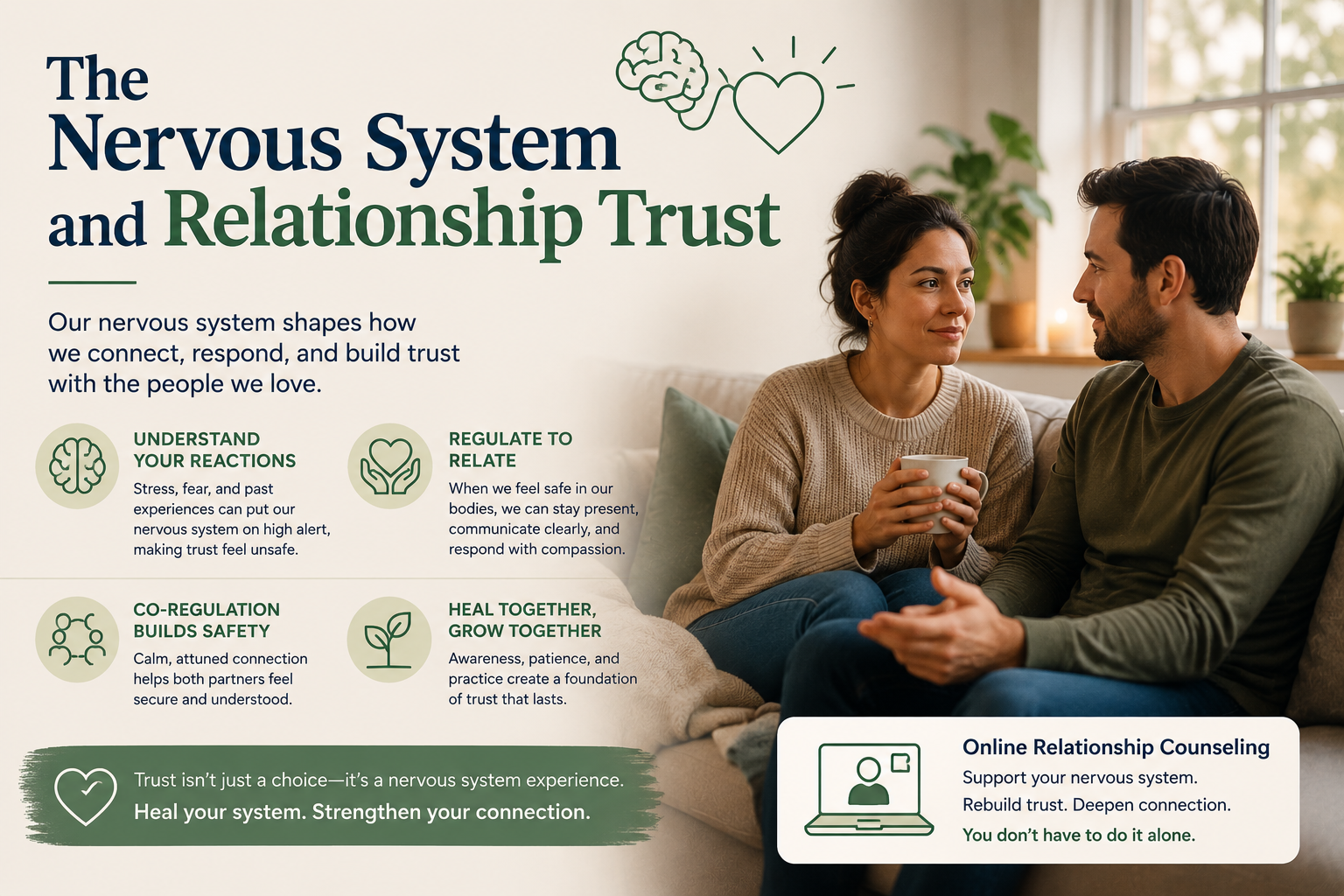
Trust is emotional, but it is also connected to the body's stress response.
When someone has experienced betrayal or repeated emotional disappointment, their nervous system may become more alert to potential threats.
A partner's tone of voice, a change in routine, or an unanswered message can trigger a strong emotional response.
The reaction may seem larger than the immediate situation because the body is responding to the history behind it.
This can lead to:
Hypervigilance
Anxiety
Anger
Withdrawal
Reassurance seeking
Difficulty relaxing around a partner
Understanding this does not mean every reaction should be accepted without accountability. It means couples can begin understanding why the reaction is happening and learn healthier ways to respond.
Many clients develop these skills through Florida telemental health therapy.
Why Communication Alone May Not Be Enough
Couples are often told that better communication will solve relationship problems.
Communication certainly matters, but simply talking more does not necessarily create trust.
If conversations repeatedly become defensive, accusatory, or emotionally overwhelming, more communication can sometimes make the problem worse.
Healthy communication requires skills such as:
Listening without immediately defending yourself
Expressing feelings without attacking
Taking responsibility
Asking questions instead of assuming
Knowing when to pause an escalating conversation
Returning to difficult topics when both partners are regulated
Therapy provides a structured environment to practice these skills.
Taking Responsibility Without Living in Shame
Accountability is an important part of rebuilding trust.
If one partner caused harm, rebuilding often requires acknowledging what happened without minimizing it.
There is an important difference between:
"I'm sorry you feel hurt."
and
"I understand that my actions hurt you, and I take responsibility for my part."
The second response recognizes the impact rather than focusing only on intentions.
At the same time, accountability should not become endless punishment. A relationship cannot heal if one person remains permanently defined by their worst mistake.
The goal is responsibility followed by changed behavior.
Reassurance and Rebuilding Security
After trust is broken, reassurance can become complicated.
The hurt partner may need more reassurance temporarily. That does not necessarily mean they are being controlling or unreasonable.
However, reassurance alone cannot become the permanent foundation of the relationship.
Healthy rebuilding gradually moves toward:
Reassurance → consistency → increased safety → renewed trust.
Both partners have a role.
The hurt partner can communicate what they need without repeatedly testing the relationship, while the other partner can respond with patience and consistency rather than frustration.
Boundaries Are Part of Trust
Boundaries are sometimes confused with rules or restrictions.
Healthy boundaries communicate what a person needs to feel respected and emotionally safe.
For example:
"I need honest communication about important decisions."
"I need us to discuss disagreements without insults."
"If we become too emotionally activated, I need us to take a short break and return to the conversation."
"I need consistency around the commitments we make to each other."
Boundaries help create predictability.
And predictability is an important ingredient in rebuilding trust.
Rebuilding Trust Through Small Actions
Trust is often rebuilt through ordinary moments rather than dramatic gestures.
That might mean:
Following through when you say you will
Communicating when plans change
Being honest about uncomfortable subjects
Listening when your partner expresses hurt
Showing affection consistently
Respecting boundaries
Keeping promises
These behaviors may seem small, but repetition matters.
A relationship becomes safer when words and actions consistently match.
What Happens During Online Relationship Counseling?
Online counseling gives couples a dedicated space to address relationship concerns with professional guidance.
Depending on the couple's needs, sessions may explore:
Communication patterns
Trust and betrayal
Emotional disconnection
Conflict
Resentment
Boundaries
Anxiety within the relationship
Family or parenting stress
Emotional regulation
The therapist helps partners understand the cycle they are caught in rather than simply deciding who is right or wrong.
For many couples, having a neutral professional present makes difficult conversations more productive.
Why Online Counseling Can Be Helpful for Couples
One of the biggest advantages of online counseling is accessibility.
Couples do not have to coordinate travel to an office or spend additional time commuting. Sessions can take place from a private location that is comfortable for both partners.
Online counseling can be especially helpful for couples who:
Have demanding work schedules
Live in different locations temporarily
Have childcare responsibilities
Travel frequently
Prefer the privacy of their own environment
Virtual sessions can make it easier to maintain consistency, which is particularly important when rebuilding trust.
Creating a Safe Environment for Online Sessions
Privacy matters during relationship counseling.
Before a session, both partners should ideally have access to a private space where they can speak openly without worrying about someone overhearing the conversation.
It can also help to:
Put phones on silent
Close unnecessary computer applications
Use headphones when appropriate
Avoid having difficult relationship conversations immediately before or after a stressful event
Creating a calm environment allows both partners to be more present.
What If One Partner Is More Ready for Therapy?
It is common for one partner to be more enthusiastic about counseling than the other.
One person may believe therapy is urgently needed while the other feels uncertain or defensive.
Pressure rarely creates genuine engagement.
Instead, it can help to explain what you hope therapy will accomplish.
Rather than:
"You need therapy because you never listen."
Try:
"I want us to have a space where we can work through this without hurting each other."
The purpose of counseling is not to prove that one person is the problem.
It is to understand the relationship dynamic and determine what needs to change.
Can a Relationship Recover After a Major Breach of Trust?
Some relationships recover after significant breaches of trust. Others ultimately move in a different direction.
Therapy cannot guarantee a particular outcome, and it should not.
Instead, counseling can help couples understand what happened, communicate honestly about what they need, and determine whether rebuilding the relationship is possible and healthy.
Recovery may involve:
Acknowledging the harm.
Taking responsibility.
Understanding contributing patterns.
Establishing clear boundaries.
Creating consistent behavior changes.
Allowing time for trust to develop again.
Healing is rarely immediate.
When Relationship Counseling Can Be Especially Helpful
Consider professional support if:
You keep having the same argument
Trust has been damaged
Communication repeatedly breaks down
One or both partners feel emotionally disconnected
Resentment continues to grow
You struggle to discuss difficult topics without conflict
Anxiety is affecting the relationship
You want to repair the relationship but do not know where to start
You do not have to wait until a relationship reaches a breaking point.
Early support can give couples more room to make meaningful changes.
Therapy and Coaching Are Not the Same
Some couples are primarily looking for emotional healing and relationship counseling. Others may want structured support around future goals, accountability, or personal development.
Understanding the difference between counseling and coaching can help you choose the appropriate type of support. Our online mental health coaching services focus more on goals, accountability, and forward movement, while therapy addresses mental health and deeper emotional concerns.
Questions About Starting Online Counseling?
It is normal to have questions before beginning.
You may wonder how online sessions work, what happens during the first appointment, or whether virtual counseling is right for your situation.
Our telehealth therapy FAQs provide additional information about getting started.
If anxiety, depression, or emotional stress is also affecting your relationship, you can reach out through our contact page.
Why Choose Let’s Talk 4 Health?
At Let’s Talk 4 Health, we understand that relationship struggles rarely exist in isolation. Anxiety, stress, burnout, family responsibilities, past experiences, and emotional patterns can all influence how partners communicate and connect.
With more than 35 years of experience, Michelle Albo, LMHC, MCAP, CTP, leads the practice with a compassionate approach focused on emotional wellbeing, healthier communication, and sustainable growth.
You can learn more about our providers through our meet our team page.
For information about confidentiality and how your information is protected, visit our privacy policy.
Trust Can Be Rebuilt, One Consistent Choice at a Time
Rebuilding trust is not about pretending the hurt never happened.
It is about acknowledging what happened while creating something healthier going forward.
Trust grows when promises are followed by action, conversations are met with honesty, and both partners feel heard and respected. It takes patience because emotional safety cannot be rushed.
Online relationship counseling can provide the structure and support needed to begin that process.
You do not have to solve every problem in one conversation. Sometimes healing begins with simply having a safe place to finally talk about what has been difficult to say.