
How Licensed Online Therapists Protect Your Privacy
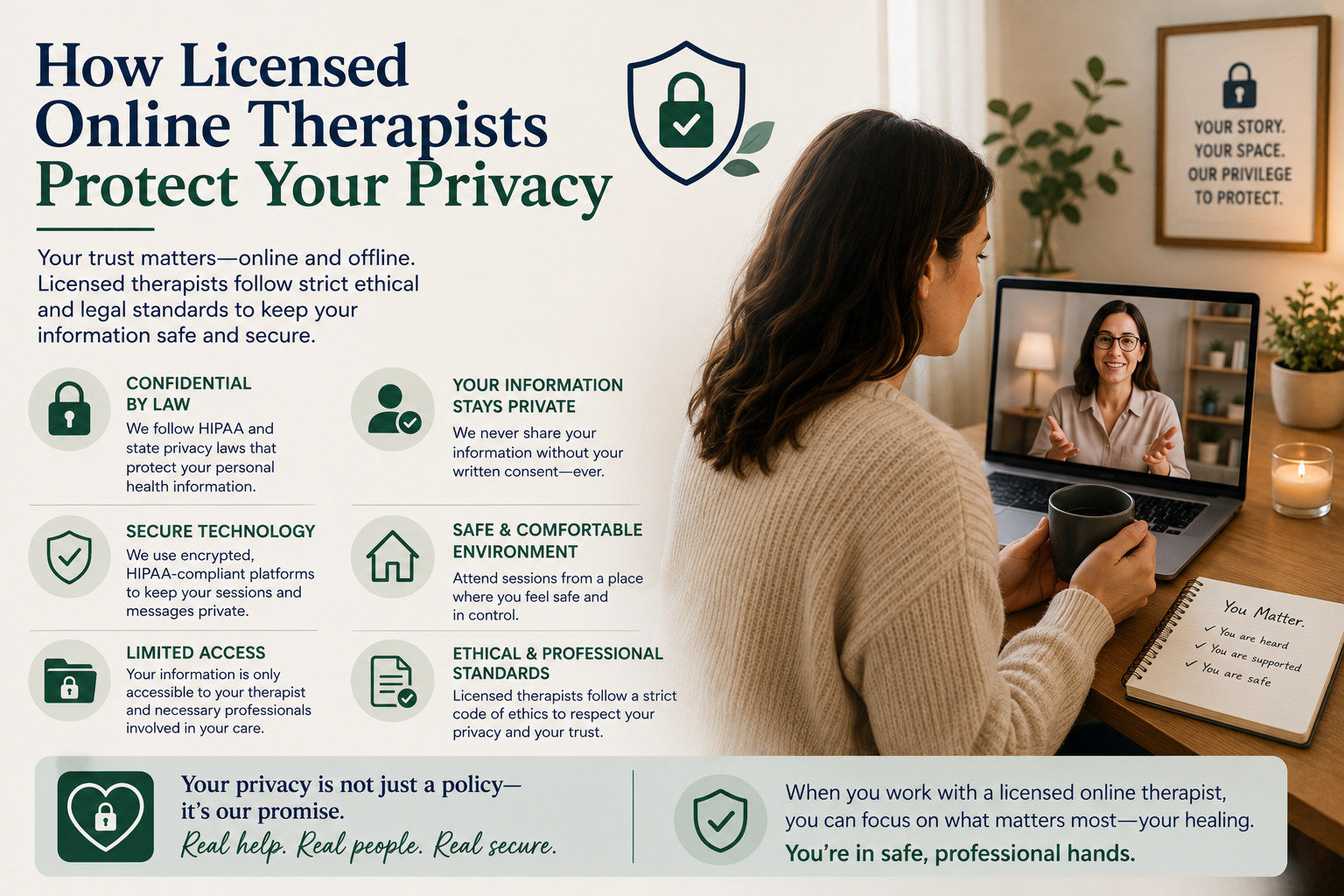
One of the biggest concerns people have before starting online therapy is privacy.
You may wonder: Who can see my information? Is my session private? What happens to the things I share with my therapist? Is online therapy really confidential?
These are important questions. Therapy often involves discussing deeply personal experiences, relationships, fears, emotions, and difficult moments. Feeling safe enough to speak honestly is an important part of the therapeutic process.
Licensed online therapists take privacy and confidentiality seriously. Professional ethical standards, privacy laws, secure technology, and careful clinical practices all play a role in protecting client information.
At Let’s Talk 4 Health, we understand that privacy is an essential part of creating a comfortable therapeutic relationship. Our home page provides more information about our approach and services.
Why Privacy Matters in Online Therapy
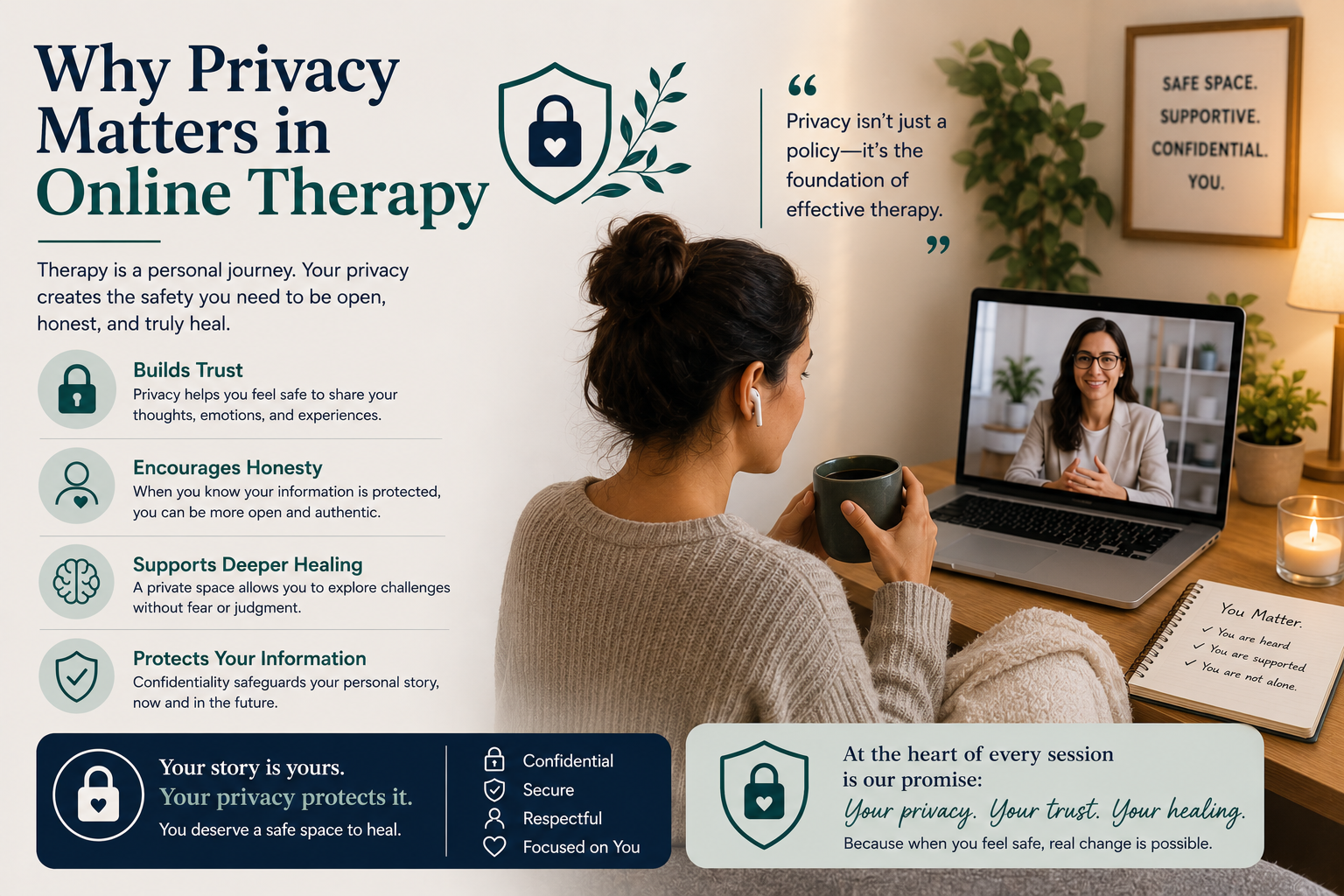
Therapy works best when you feel comfortable being honest.You may want to discuss things you have never shared with anyone else. That could include anxiety, depression, relationship difficulties, family concerns, workplace stress, grief, trauma, or personal fears.If you are worried about who might access your information, you may hold back during sessions. That can make it harder to get the support you need.Privacy creates a foundation for trust.When clients understand how their information is protected and what confidentiality means, they can often feel more comfortable participating openly in therapy.For individuals looking for private, accessible care, Florida online mental health counseling provides a convenient way to connect with professional support.
What Does Confidentiality Mean in Therapy?
Confidentiality means that information shared during therapy is generally kept private by the therapist and practice, subject to applicable laws, professional requirements, and specific exceptions.Your therapist may learn about:Your thoughts and feelingsPersonal experiencesFamily relationshipsMental health concernsTreatment goalsChallenges at work or homeThis information is not simply something that can be casually shared with other people.Confidentiality helps create an environment where you can speak honestly without worrying that your personal experiences will become public.
How HIPAA Relates to Online Therapy
If a mental health provider is a HIPAA covered entity, HIPAA provides federal privacy protections for protected health information.HIPAA establishes standards related to how certain health information is used and disclosed and requires covered entities to maintain safeguards for protected health information.This is particularly important for online therapy because some of your care takes place digitally.Secure systems, appropriate privacy practices, and responsible handling of health information are all important components of virtual mental health care.If you want to understand how Let’s Talk 4 Health handles information, you can review our privacy policy.
What Information May Be Protected?
Your protected health information can include information connected to your mental health care.Depending on the circumstances, this may include:Contact informationIntake informationTreatment recordsBilling informationAppointment informationClinical notesInformation discussed during treatmentThe exact protections that apply depend on the type of information, the provider, and applicable laws.Your therapist should be able to explain how your information is handled and answer questions you have about privacy.
How Secure Technology Supports Online Therapy
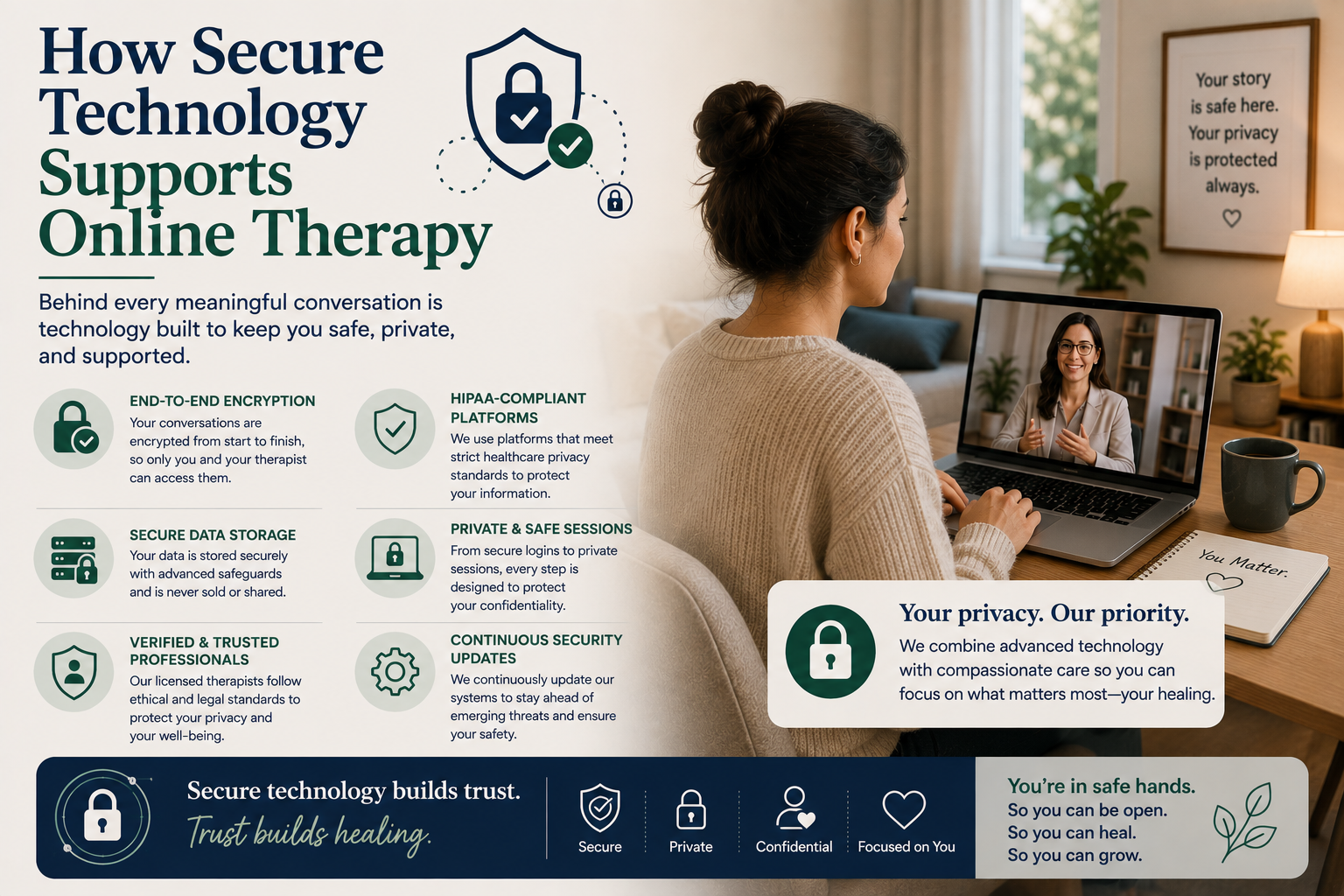
Online therapy depends on technology, which means digital security is an important part of protecting privacy.
Professional practices should use appropriate secure systems for virtual sessions and the transmission of health information.
This can include safeguards surrounding:
Video sessions
Electronic records
Communication
Appointment information
Storage of client information
However, privacy is not only about technology. Your therapist's policies and professional practices matter too.
At Let’s Talk 4 Health, virtual counseling provides clients with the convenience of receiving care from a private location while maintaining professional standards around confidentiality.
You can learn more about Florida telemental health therapy and how virtual care can fit into your routine.
Your Location Matters Too
Online therapy can be private, but your physical environment is also important.
If you are attending a session from home, consider choosing a space where other people cannot overhear the conversation.
You might:
Close the door
Use headphones
Let household members know you need uninterrupted time
Choose a quieter room
Avoid public spaces when discussing sensitive information
A private environment allows you to speak more freely.
It also helps you stay focused on the therapeutic conversation.
What About Using a Phone or Computer?
The device you use can also affect privacy.
If possible, consider:
Using a personal device rather than a shared computer
Keeping your device password protected
Avoiding public Wi-Fi for sensitive activities when practical
Keeping your operating system and applications updated
Logging out of shared devices
Being aware of who may be nearby
These simple habits can add another layer of privacy to your online therapy experience.
Can Someone Else Hear My Therapy Session?
This is one of the most common concerns about virtual counseling.
The answer depends partly on your environment.
A therapist can take steps to conduct sessions privately, but clients also need to consider where they are physically located.
For example, participating in a session from a busy living room may make it difficult to speak openly if other people are nearby.
Before your appointment, consider creating a dedicated private space.
If privacy at home is difficult, discuss the situation with your therapist. Together, you may be able to identify a more appropriate setting.
What Are the Limits of Confidentiality?
Confidentiality is extremely important, but it is not unlimited.
There are specific circumstances in which a therapist may have legal or ethical obligations to disclose certain information.
These circumstances can vary depending on applicable laws and the situation. Examples may include certain concerns involving serious and immediate safety risks, abuse or neglect that must legally be reported, or a valid legal requirement.
Your therapist should explain relevant limits of confidentiality as part of the informed consent process.
If you have questions about confidentiality, ask before beginning therapy. A professional should be willing to explain the policies clearly.
Why Licensed Therapists Take Privacy Seriously
A licensed therapist is not simply someone who provides advice online.
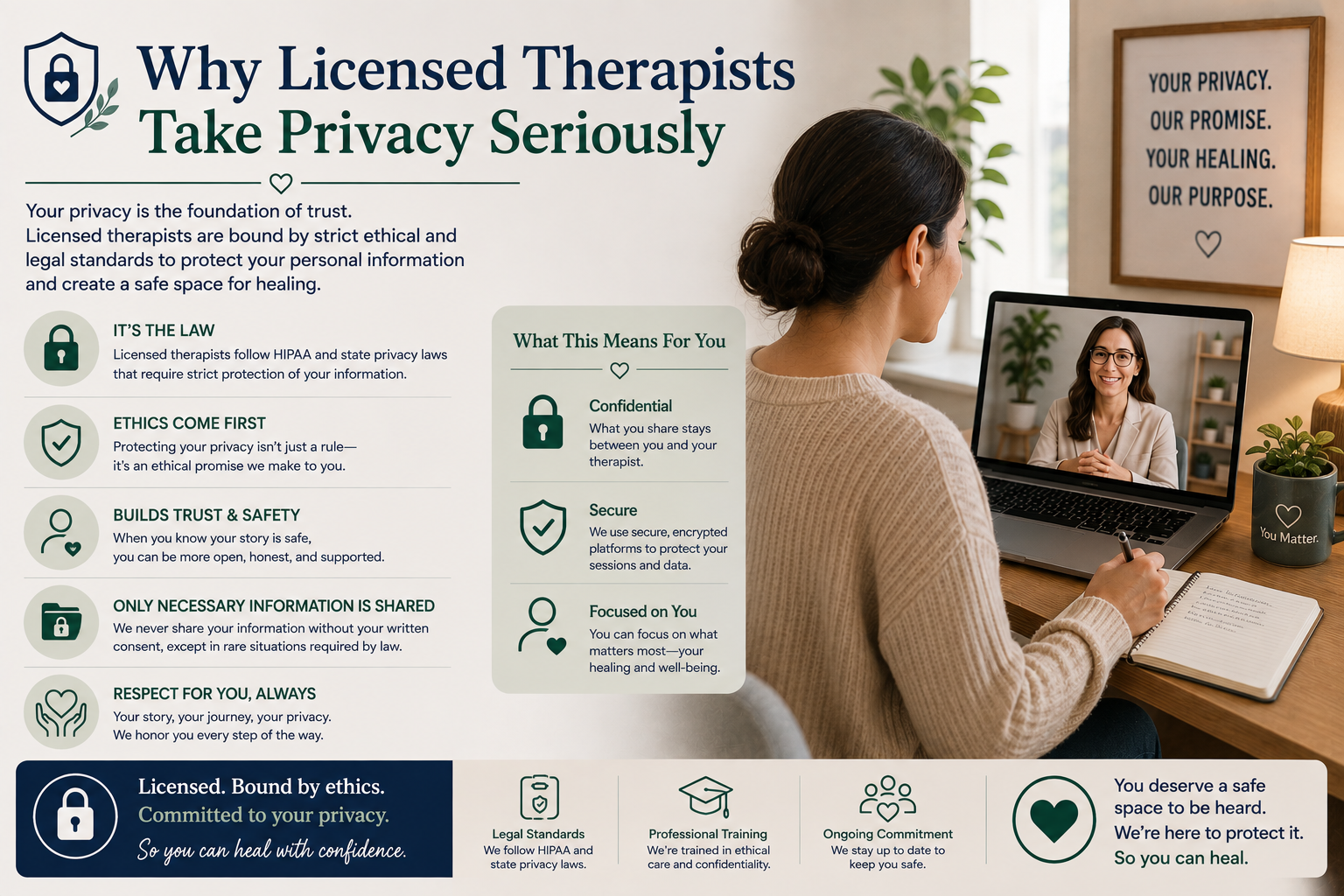
Licensed mental health professionals operate within professional and legal frameworks that include responsibilities regarding client care, confidentiality, documentation, and ethical conduct.
This is one reason it is important to verify that you are working with a qualified professional.
At Let’s Talk 4 Health, you can learn more about our professional background and providers through our meet our team page.
Is Online Therapy More Private Than In Person Therapy?
It depends on what makes you feel most comfortable.
Some people actually find online therapy more private because they can attend sessions from home without walking into a counseling office.
There is no waiting room and no need to worry about running into someone you know while arriving for an appointment.
For others, home may not provide enough privacy.
The important question is not whether online therapy is automatically more private than in person therapy.
It is whether you can create a secure and comfortable environment for your sessions.
Privacy Can Make Therapy Feel Safer
Emotional safety and privacy often go hand in hand.
When you know that your information is being handled appropriately, it can become easier to discuss sensitive subjects.
You may feel more comfortable talking about:
Relationship problems
Anxiety
Depression
Family conflict
Work stress
Grief
Personal insecurities
Difficult life experiences
This openness can help your therapist understand what you are actually experiencing rather than only seeing the parts you feel comfortable sharing.
Online Therapy and Relationship Counseling
Privacy becomes particularly important when therapy involves relationship concerns.
Couples may discuss sensitive subjects involving trust, communication, intimacy, finances, family relationships, or past conflicts.
Creating a private environment for online relationship counseling allows both people to participate without unnecessary interruptions.
If relationship concerns are contributing to anxiety or emotional stress, online therapy services in Florida can provide a structured space to address those challenges.
What You Can Ask Before Starting Therapy
If privacy is one of your concerns, do not be afraid to ask questions.
You can ask your therapist:
How are online sessions conducted?
Understanding the platform and process can make virtual therapy feel less uncertain.
How is my information stored?
A provider should be able to explain their general privacy practices.
Who has access to my records?
Ask what policies apply to access and disclosure.
What are the limits of confidentiality?
Understanding the exceptions before therapy begins can help you feel informed.
What should I do if I do not have privacy at home?
Your therapist may be able to help you identify alternatives.
You can also find answers to common questions about online therapy on our telehealth therapy FAQs page.
Privacy Is Part of the Therapeutic Relationship
Privacy is not simply a technical requirement.
It is part of the trust between a client and therapist.
When you share something deeply personal, you should be able to understand how that information is handled and what protections apply.
That transparency helps create a stronger therapeutic relationship and gives you greater confidence in the process.
Online Therapy Offers Privacy and Convenience
For many people, online therapy provides an appealing combination of privacy and accessibility.
You can attend sessions without:
Driving to an office
Spending time in a waiting room
Rearranging your entire day
Traveling long distances
Instead, you can connect from a private environment that works for you.
This can be particularly helpful for busy professionals, parents, caregivers, and individuals who find traditional appointments difficult to manage.
Through Florida telemental health services, support can become part of your routine without adding unnecessary logistical stress.
When Privacy Concerns Should Not Stop You From Seeking Help
It is completely reasonable to have questions about confidentiality.
However, uncertainty should not prevent you from getting the support you need.
A good first step is simply asking questions.
You can ask about:
Confidentiality
Technology
Records
Communication
Your rights as a client
Limits of privacy
Being informed allows you to make a decision based on facts rather than fear.
Why Choose Let’s Talk 4 Health?
At Let’s Talk 4 Health, we understand that seeking therapy requires trust.
Our goal is to provide compassionate, professional support in an environment where clients can feel comfortable discussing what they are experiencing.
With more than 35 years of experience, Michelle Albo, LMHC, MCAP, CTP, leads the practice with a focus on emotional wellbeing, practical coping strategies, and sustainable personal growth.
You can learn more about our providers through our meet our team page.
If you are ready to explore therapy, you can connect through our contact page.
For additional information about how your information is handled, visit our privacy policy.
You Deserve to Feel Safe Seeking Support
Choosing a therapist is a personal decision. You deserve to understand how your privacy is protected before sharing your story.
Licensed online therapists use professional standards, privacy practices, and secure technology to help protect client information. At the same time, clients can take simple steps to create a private environment on their end.
Privacy is not something you should have to guess about.
Ask questions. Understand your rights. Learn how your provider handles your information.
When you feel informed and comfortable, therapy can become a safe space to slow down, be honest, and work toward meaningful emotional change.