
Online Therapy for College Students: Managing Stress and Anxiety
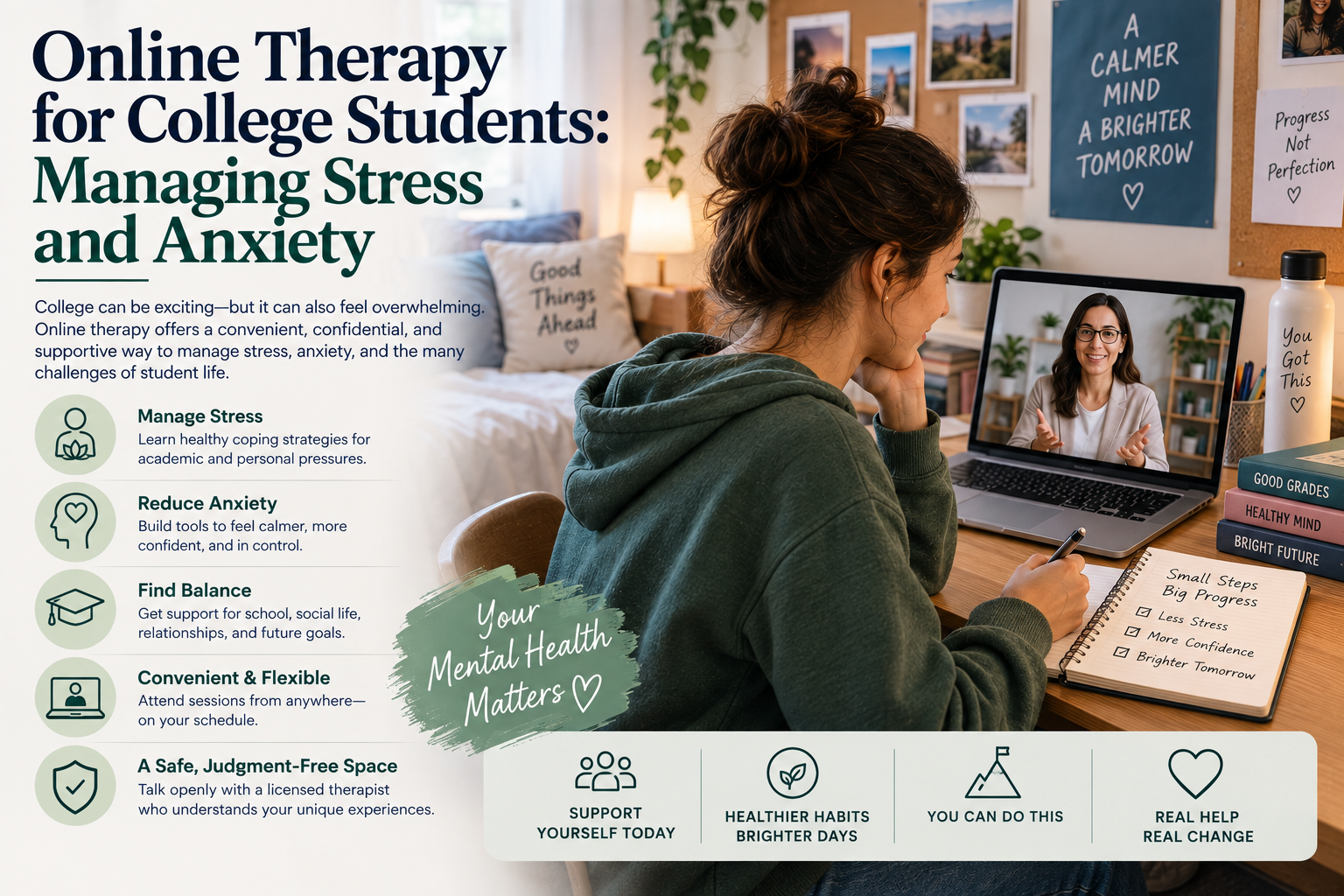
College can be an exciting time filled with new experiences, friendships, independence, and opportunities. It can also be one of the most stressful transitions in a young person's life.
Students are often expected to manage academics, relationships, finances, work, social expectations, and personal responsibilities at the same time. For some, the pressure becomes difficult to manage. Anxiety may begin affecting sleep, concentration, motivation, relationships, and confidence.
What makes college stress particularly challenging is that students may feel they are supposed to be enjoying the experience. When they are struggling emotionally, they may wonder whether something is wrong with them or whether everyone else is handling college better.
They are not alone.
Online therapy can give college students a private and accessible place to talk about what they are experiencing, understand the sources of their stress, and develop healthier ways to manage anxiety.
At Let’s Talk 4 Health, we provide compassionate, professional support for individuals navigating anxiety, stress, burnout, life transitions, and emotional overwhelm. You can learn more about our approach by visiting our home page.

Why College Can Be So Stressful
College introduces multiple changes at once.
A student may be adjusting to a new environment while also managing a demanding academic schedule. They may be living away from family for the first time, building new friendships, navigating dating and relationships, or working part time to cover expenses.
At the same time, there can be pressure to decide what comes next.
Questions about careers, majors, internships, graduate school, and future goals can create another layer of uncertainty.
Common sources of college stress include:
Academic pressure
Exams and deadlines
Financial concerns
Social expectations
Family pressure
Relationship challenges
Career uncertainty
Living away from home
Lack of sleep
Balancing school and employment
When several of these stressors happen simultaneously, even a student who usually feels capable can become overwhelmed.
Florida online mental health counseling can provide a supportive space to understand these challenges and develop practical coping strategies.
When Normal College Stress Becomes Anxiety
Stress and anxiety are related, but they are not exactly the same.
Stress is often connected to a specific challenge. You might feel stressed because you have an exam tomorrow or several assignments due.
Anxiety can continue even when there is no immediate problem to solve.
A student experiencing anxiety may constantly think:
"What if I fail?"
"What if everyone thinks I'm struggling?"
"What if I choose the wrong career?"
"What if something goes wrong?"
The mind continues searching for possible threats and problems.
Physical symptoms can also appear, including:
Racing heart
Muscle tension
Restlessness
Difficulty sleeping
Fatigue
Difficulty concentrating
Changes in appetite
Recognizing these patterns can help students seek support before anxiety begins interfering significantly with daily life.
Academic Pressure and Perfectionism
College can make perfectionism especially difficult.
A student who previously earned excellent grades may feel intense pressure to maintain that performance. One disappointing grade can feel like evidence that they are falling behind.
Perfectionism may sound like:
"If I don't get an A, I've failed."
"Everyone else understands this better than I do."
"I can't afford to make mistakes."
"I should be able to handle everything."
These thoughts can create a cycle of anxiety and overwork.
The student works harder because they are afraid of failure. Temporary relief follows achievement. Then another assignment, exam, or expectation appears.
Eventually, exhaustion sets in.
Online therapy can help students understand the connection between perfectionism, anxiety, and self-worth through Florida telemental health therapy.
Social Anxiety in College
College can involve a tremendous amount of social pressure.
Students may feel expected to make friends quickly, participate in activities, attend events, and fit into a particular social environment.
For someone experiencing social anxiety, these situations can feel overwhelming.
They may worry about:
Being judged
Saying something embarrassing
Being excluded
Meeting new people
Speaking in class
Giving presentations
Attending social events
Avoiding these situations may provide temporary relief, but it can also reinforce anxiety over time.
Therapy can help students gradually understand these fears and develop healthier ways of responding to them.
Feeling Lonely While Surrounded by People
College does not automatically eliminate loneliness.
A student can attend classes, live in a dorm, participate in activities, and still feel disconnected.
Loneliness may become particularly difficult when students compare their experiences with what they see online.
Social media can create the impression that everyone else is constantly making friends, going out, traveling, and enjoying college.
Real life is much more complicated.
Feeling lonely does not mean you are doing college incorrectly.
Sometimes meaningful connection develops slowly.
Therapy can provide a confidential place to talk about loneliness without having to pretend everything is fine.

Homesickness and Major Life Transitions
Moving away from home can be exciting and difficult at the same time.
Students may miss:
Family
Friends
Familiar routines
Favorite places
Familiar food
Their previous sense of stability
Homesickness can become especially strong during holidays, stressful academic periods, or major transitions.
Instead of judging yourself for missing home, it can help to recognize that adjustment takes time.
Creating familiar routines, maintaining meaningful connections, and gradually building a sense of belonging can make the transition easier.
Sleep and Student Mental Health
College schedules can make healthy sleep difficult.
Late night studying, social activities, work schedules, screen use, and inconsistent routines can all interfere with sleep.
Unfortunately, poor sleep can make stress and anxiety harder to manage.
A tired brain has fewer resources available for concentration, emotional regulation, and problem solving.
Students can support their mental health by creating simple sleep routines, such as:
Keeping a relatively consistent sleep schedule
Limiting stimulating activities before bed
Creating a comfortable sleep environment
Taking breaks from academic work
Avoiding using the bed as an all-purpose workspace when possible
If anxiety is keeping you awake regularly, professional support may help address the underlying concerns rather than focusing only on sleep.
The Pressure to Have Your Future Figured Out
College is often presented as the time when students should determine what they want to do with the rest of their lives.
That expectation can be overwhelming.
Choosing a major does not mean you have chosen your entire future.
Career interests can change. Goals can evolve. Students may discover that the path they initially imagined is not right for them.
Uncertainty is part of growing.
Therapy can provide space to explore uncertainty without turning every decision into a crisis.
Financial Stress and College Anxiety
Financial concerns can create significant emotional pressure.
Students may worry about:
Tuition
Student loans
Housing
Food
Transportation
Part time employment
Supporting themselves after graduation
Financial stress can also affect relationships with family members or partners.
When financial concerns are combined with academic pressure, students may feel as though there is no room to slow down.
Talking through these concerns can help students distinguish between problems that require practical action and anxiety that is creating additional mental pressure.
How Online Therapy Fits Into a Student's Schedule
One of the biggest challenges college students face is finding time for appointments.
Classes may change from semester to semester. Students may have jobs, internships, extracurricular activities, or family obligations.
Online therapy provides flexibility.
A student can attend a session from a private room, apartment, or another appropriate location without spending additional time traveling to an office.
This can make maintaining regular therapy easier.
Online therapy in Florida provides an accessible option for students who want professional support without adding another complicated commitment to their schedule.

Why Privacy Matters to College Students
Students may worry about other people knowing they are receiving therapy.
They may wonder:
"Will my roommates know?"
"Will my friends find out?"
"Will someone see me going into a counseling office?"
Online therapy can provide an additional level of convenience because sessions can take place from a private location.
However, students should still choose a setting where conversations cannot be overheard.
Using headphones, closing the door, and letting roommates know you need uninterrupted time can help create a more private environment.
You can learn more about privacy and confidentiality through our privacy policy.
What Happens During Online Therapy?
For a first-time client, the idea of therapy can feel intimidating.
You do not need to prepare a perfect explanation of what is wrong.
Your therapist can help guide the conversation.
Sessions may involve discussing:
What brought you to therapy
Current sources of stress
Anxiety symptoms
Relationships
Academic pressure
Family dynamics
Personal goals
Over time, therapy may include practical strategies for managing emotions, reducing anxiety, improving communication, and building resilience.
You can find answers to common questions about virtual therapy through our telehealth therapy FAQs.
Practical Ways College Students Can Manage Anxiety
Therapy is one part of managing anxiety. Students can also build simple daily habits that support emotional wellbeing.
Create Small Anchors
College schedules can change constantly, so instead of trying to control every part of the day, create a few predictable habits.
For example:
Wake up around the same time
Eat regular meals
Take a short walk
Set aside study periods
Create a wind-down routine
Small anchors can create a greater sense of stability.
Break Large Tasks Into Smaller Steps
Anxiety often makes large tasks feel impossible.
Instead of thinking:
"I have to finish this entire paper."
Focus on:
"I will spend 20 minutes outlining the first section."
Small actions reduce overwhelm and create momentum.
Schedule Recovery
Students often schedule classes, work, studying, and social activities but forget to schedule recovery.
Rest is not wasted time.
Your brain needs periods of reduced stimulation to recover from continuous demands.
Even a short walk, quiet meal, or period away from screens can create valuable breathing room.
Pay Attention to Your Body
Anxiety often appears physically before you consciously recognize what is happening.
Notice:
Tight shoulders
Clenched jaw
Rapid breathing
Restlessness
Stomach discomfort
These can be signals that your system needs a pause.
Learning nervous system regulation is an important part of Florida telemental health services.
When a Student Should Consider Professional Support
You do not need to wait until anxiety becomes severe.
Consider reaching out if you notice that stress is consistently affecting:
Academic performance
Sleep
Relationships
Motivation
Concentration
Appetite
Daily functioning
Professional support can provide perspective and practical tools before problems become more overwhelming.
If you are experiencing anxiety or depression and want to explore support, our online therapy services for anxiety and depression are available virtually.
Therapy Is Not a Sign That You Cannot Handle College
Students sometimes avoid therapy because they believe needing help means they are not strong enough.
The opposite can be true.
Recognizing that something is becoming difficult and asking for support is an act of self-awareness.
College is a major period of growth. There is no requirement to navigate every challenge alone.
Therapy can give students a place where they do not have to perform, achieve, or pretend.
They can simply be honest.
Therapy vs. Coaching for College Students
Some students are looking for emotional support, while others primarily want help with goals, accountability, organization, or personal development.
These are different needs.
Therapy focuses on mental health and emotional wellbeing. Coaching is generally more future focused and can emphasize goals, structure, accountability, and performance.
Students who want additional support with personal goals can explore online mental health coaching in Florida.
When mental health concerns such as significant anxiety, depression, or emotional distress are involved, therapy is the more appropriate starting point.
Why Choose Let’s Talk 4 Health?
At Let’s Talk 4 Health, we understand that every student's experience is different.
College can bring excitement and opportunity, but it can also bring uncertainty, pressure, loneliness, anxiety, and emotional exhaustion.
With more than 35 years of experience, Michelle Albo, LMHC, MCAP, CTP, provides compassionate, evidence based support designed to help individuals understand their emotions, develop practical coping strategies, and build sustainable emotional wellbeing.
You can learn more about the professionals behind our practice through our meet our team page.
For students who have questions about getting started, our telehealth therapy FAQs provide additional information.
If you are ready to take the next step, you can connect through our contact page.
College Is a Time to Grow, Not a Test You Have to Pass Alone
College can be challenging even when things are going well.
You can be excited about your future and still feel anxious. You can love your school and still feel lonely. You can be doing well academically and still feel exhausted.
These experiences do not make you weak or incapable.
They make you human.
Online therapy gives college students a flexible space to understand what they are experiencing, develop healthier coping strategies, and build confidence in navigating challenges.
You do not have to have everything figured out.
You only need to take the next manageable step. And sometimes, that step is asking for support.