
Why Rest Feels Uncomfortable and How to Retrain Your Nervous System
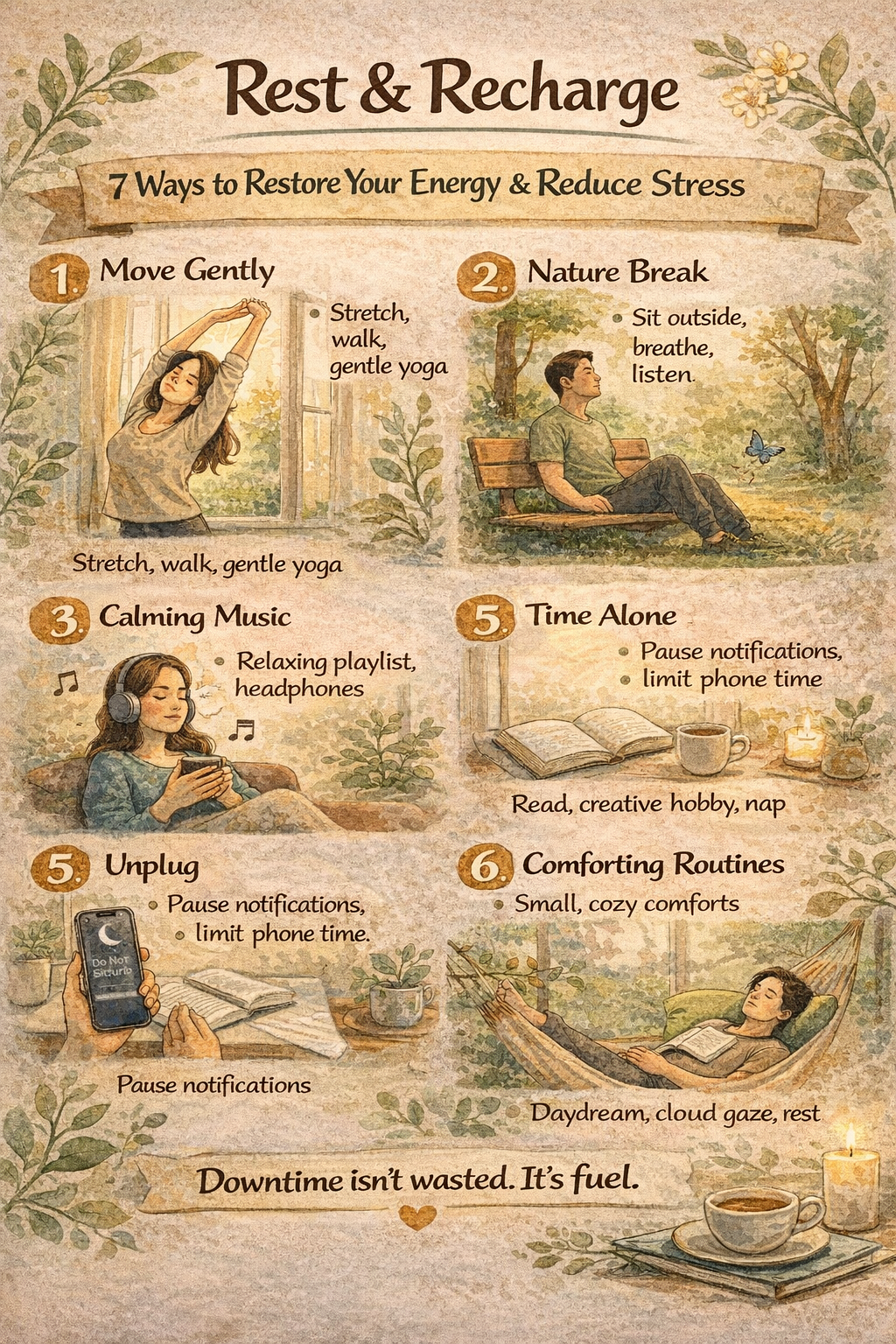
For many people, rest does not feel peaceful. It feels uncomfortable, uneasy, or even anxiety-provoking. Slowing down may bring guilt, racing thoughts, or a restless urge to stay busy. Instead of feeling restored, stillness can feel unsafe.
This experience is more common than most people realize. If rest feels difficult, it is not because you are lazy, unmotivated, or doing something wrong. It is often a sign that your nervous system has been conditioned to stay in survival mode. Understanding why this happens can help you gently retrain your body to feel safe in stillness.
At Let’s Talk 4 Health, we often work with individuals who struggle to relax even when they are exhausted. Learning how to support the nervous system is a key part of emotional healing. You can learn more about our approach by visiting our home page.
Why Slowing Down Can Trigger Anxiety
When the body has been under prolonged stress, high alert becomes the new normal. The nervous system adapts to constant activity, pressure, or emotional demand. Over time, busyness begins to feel familiar, while rest feels unfamiliar.
The brain is wired to prefer what feels known, even if it is exhausting. When you stop moving, the nervous system may interpret stillness as a loss of control. This can activate anxiety, racing thoughts, or physical tension.
In these moments, rest is not actually the threat. The unfamiliarity of calm is what the brain reacts to. Support through Florida online mental health counseling can help individuals understand and shift these patterns.
Stress Conditioning and Survival Mode
Stress conditioning occurs when the body becomes used to operating under pressure. Work demands, caregiving roles, emotional labor, financial stress, or long term uncertainty can keep the nervous system activated for extended periods.
When this happens, the body begins to associate productivity and alertness with safety. Slowing down may trigger discomfort because the system is wired to keep scanning for the next demand.
This state is often called survival mode. In survival mode, the body prioritizes doing over being. Rest feels undeserved, unsafe, or inefficient, even when exhaustion is present.
Therapy helps individuals move from survival mode to regulation throughFlorida telemental health therapy.
Why Guilt Shows Up During Rest
Guilt during rest often comes from internal beliefs about worth and productivity. Many people learn early in life that value comes from achievement, caretaking, or staying busy. When rest does not align with these beliefs, guilt appears.
The nervous system also associates activity with control. Rest can feel like letting your guard down, which may trigger discomfort rather than relief.
Recognizing guilt as a learned response, not a moral truth, is an important step. Therapy provides space to examine these beliefs through online therapy in Florida.
Physical Restlessness and Stored Stress
Sometimes rest feels uncomfortable not because of thoughts, but because of physical sensations. When the body finally slows, stored stress may surface as tension, agitation, or restlessness.
The nervous system may be releasing accumulated activation. Without tools to interpret these sensations, the brain may label them as danger rather than discharge.
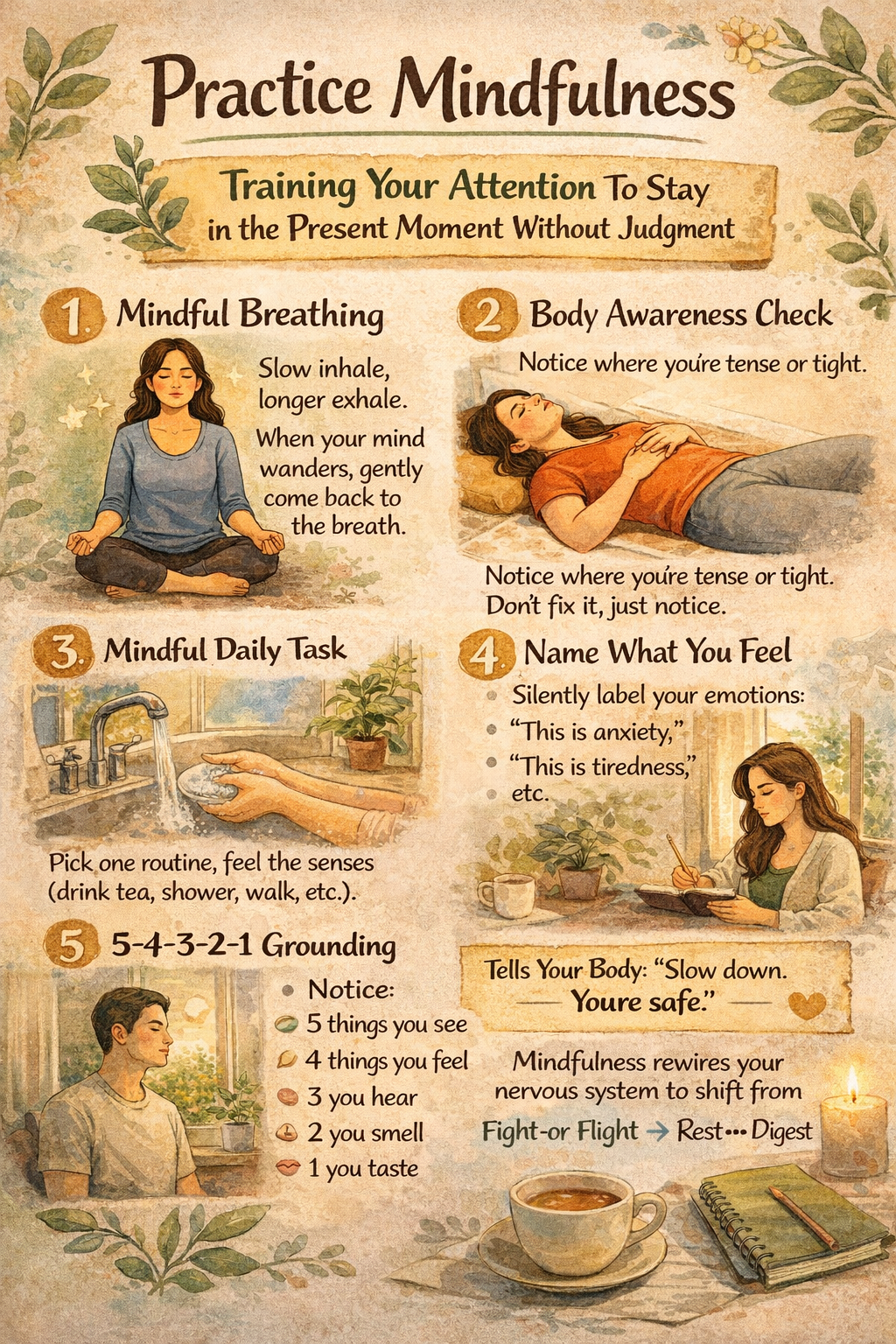
Learning to recognize these sensations as part of the regulation process helps reduce fear.
Retraining the Nervous System to Feel Safe at Rest
The nervous system can learn that stillness is safe, but this happens gradually. Forcing long periods of rest often increases anxiety. Gentle exposure works better.
Helpful techniques include:
Start small
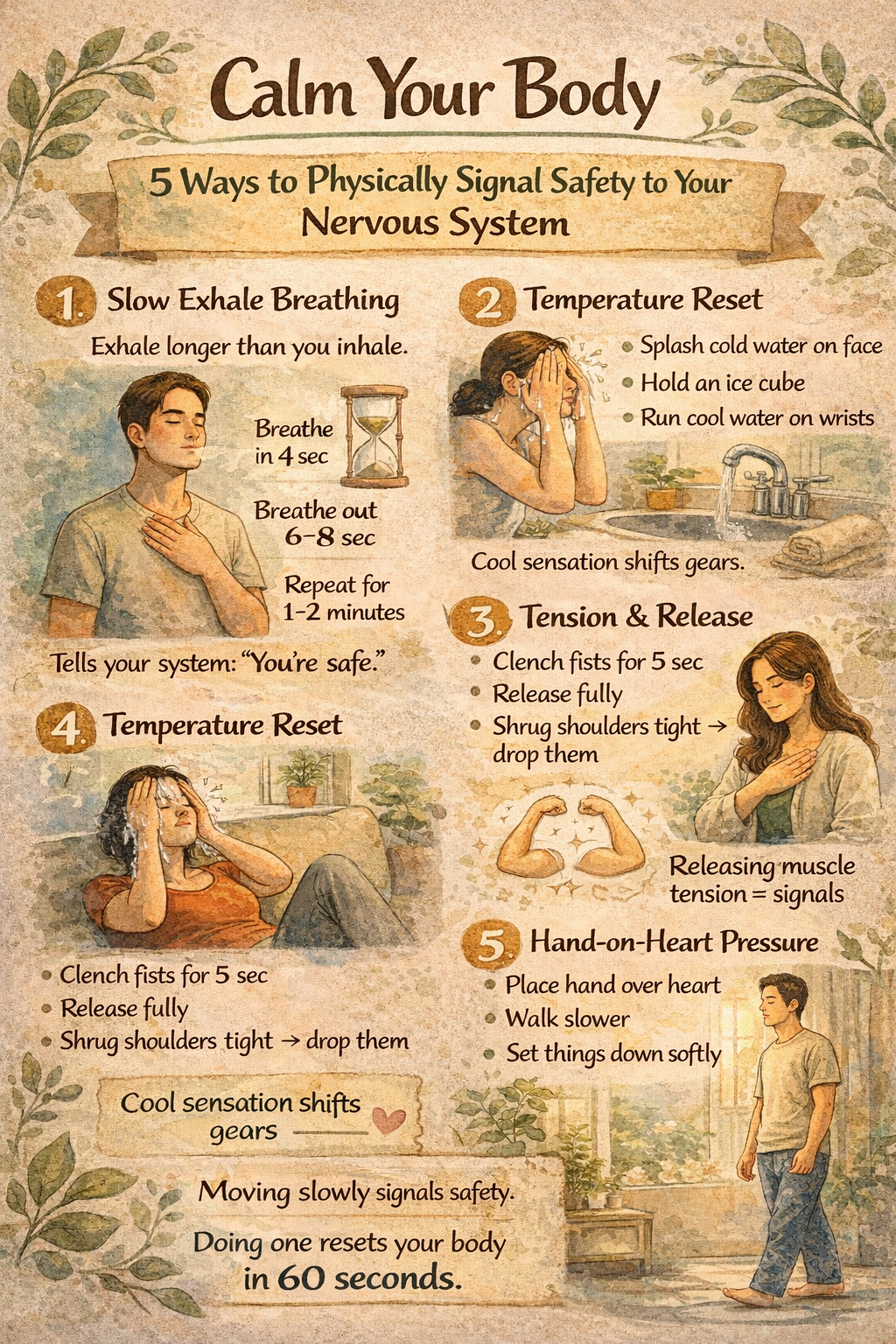
Short moments of stillness, even one to three minutes, allow the body to adjust without overwhelm.
Pair rest with safety cues
Soft lighting, calming sounds, or a warm blanket signal safety to the nervous system.
Use slow breathing
Long exhales activate the parasympathetic nervous system, helping the body shift out of high alert.
Add gentle movement before stillness
Light stretching or walking can release excess activation, making rest feel more accessible.
Many individuals build these regulation skills through Florida telemental health services.
Changing Your Relationship With Rest
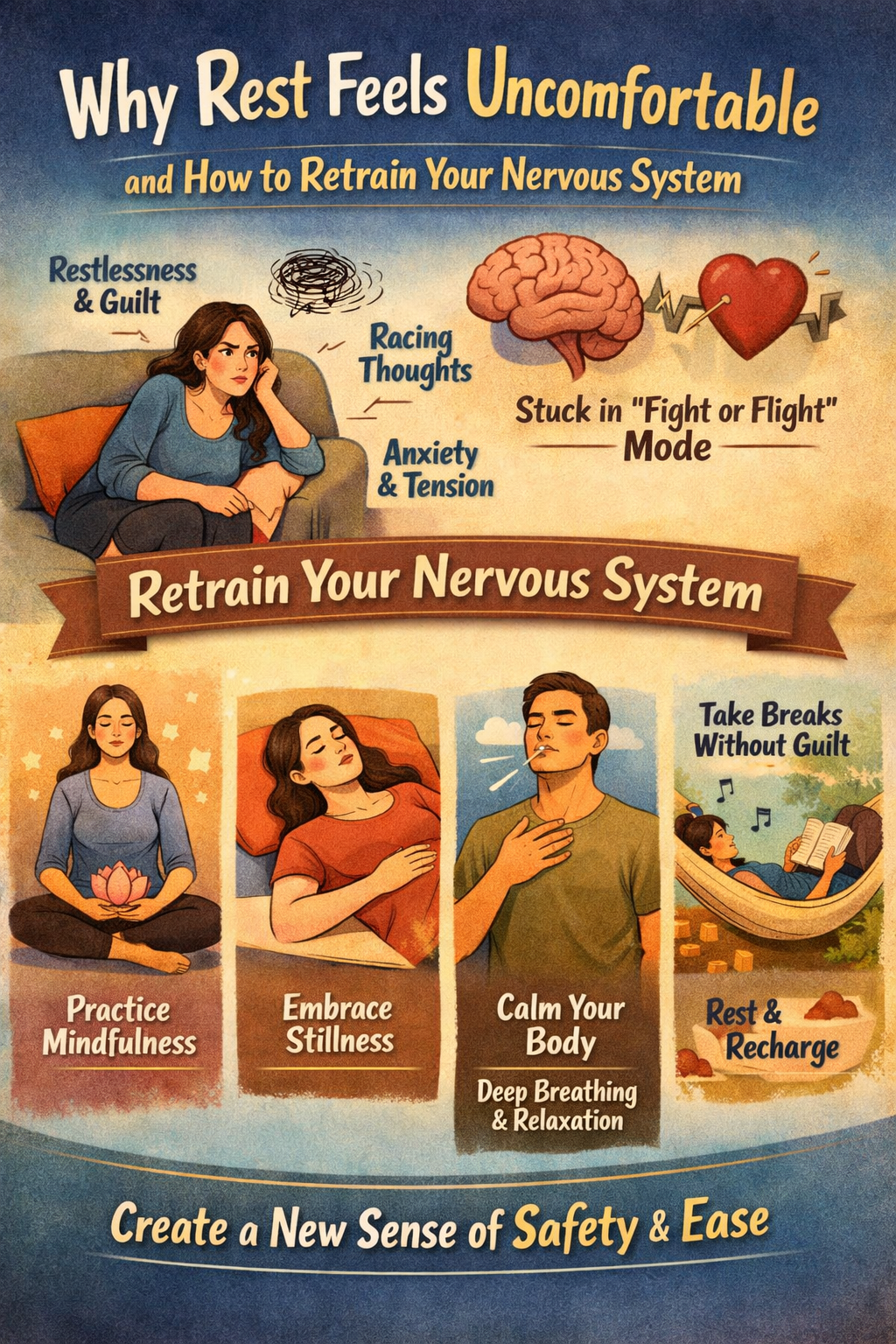
Rest is not a reward you earn. It is a biological need. Reframing rest as maintenance rather than indulgence helps reduce resistance.
You can practice reminding yourself that rest supports focus, emotional balance, and long term wellbeing. When the nervous system learns that rest leads to safety rather than loss of control, the discomfort gradually decreases.
When Support Can Help
If rest consistently triggers anxiety, guilt, or emotional discomfort, professional support can help. Therapy provides tools for nervous system regulation, emotional processing, and shifting long held stress patterns.
Common questions about starting therapy are answered on our telehealth therapy FAQs page. If you are ready to reach out, you can begin through our contact page for anxiety and depression support.
Why Choose Let’s Talk 4 Health
Let’s Talk 4 Health offers compassionate, evidence based care for individuals navigating stress, burnout, and nervous system dysregulation. With over 35 years of experience, Michelle Albo, LMHC, MCAP, CTP, leads the practice with a focus on sustainable emotional healing.
You can learn more about our providers by visiting our meet our team page. For information on confidentiality, please review our privacy policy.
Rest Can Become Safe Again
If rest feels uncomfortable, your system is not broken. It is protecting you based on past experiences of stress and demand. With patience, gentle practice, and support, the nervous system can relearn that stillness is safe.
Over time, rest can shift from something that triggers anxiety to something that restores balance. You do not have to force it. You can build safety in stillness step by step.